
A bronze breastplate of the spirit deity, Jumadi
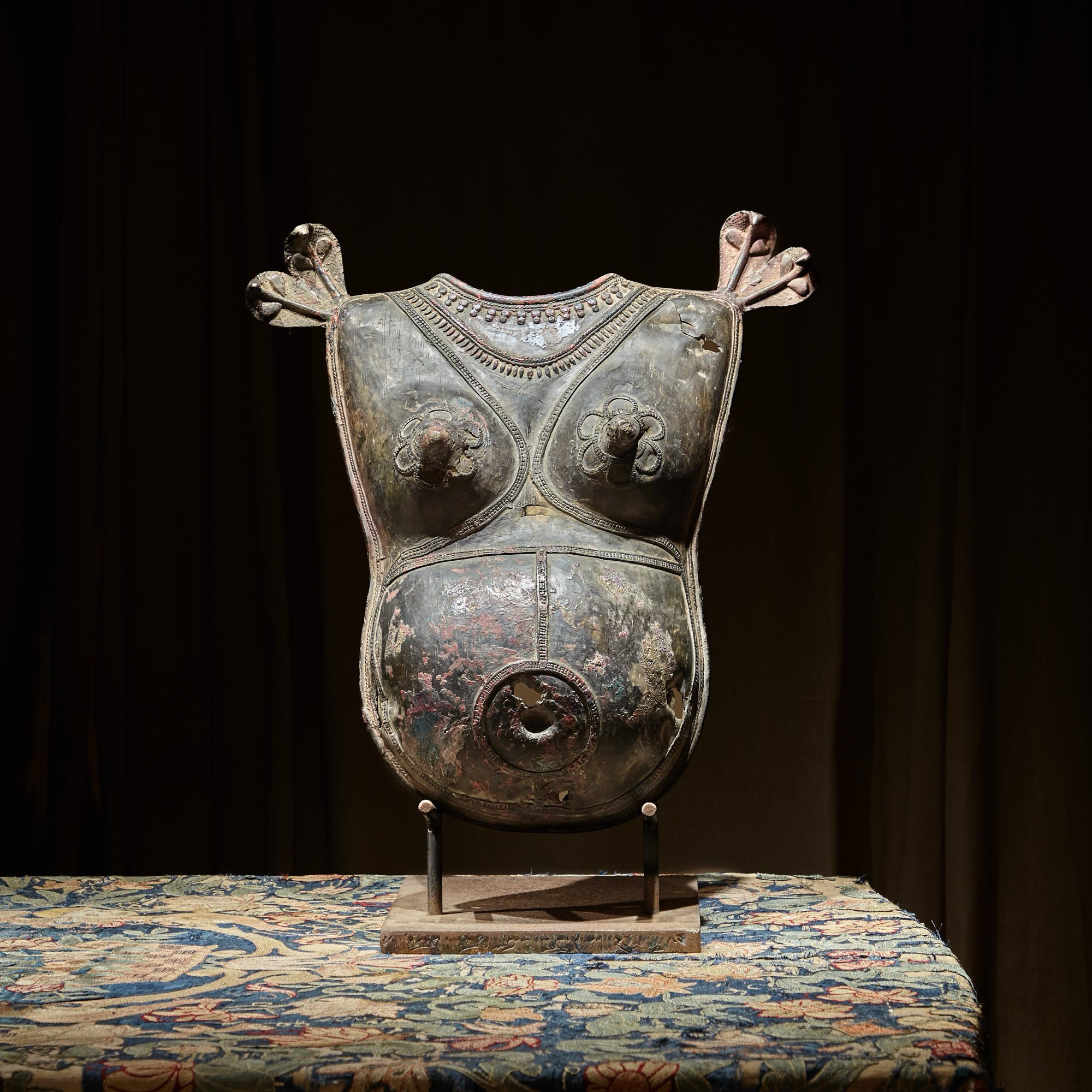
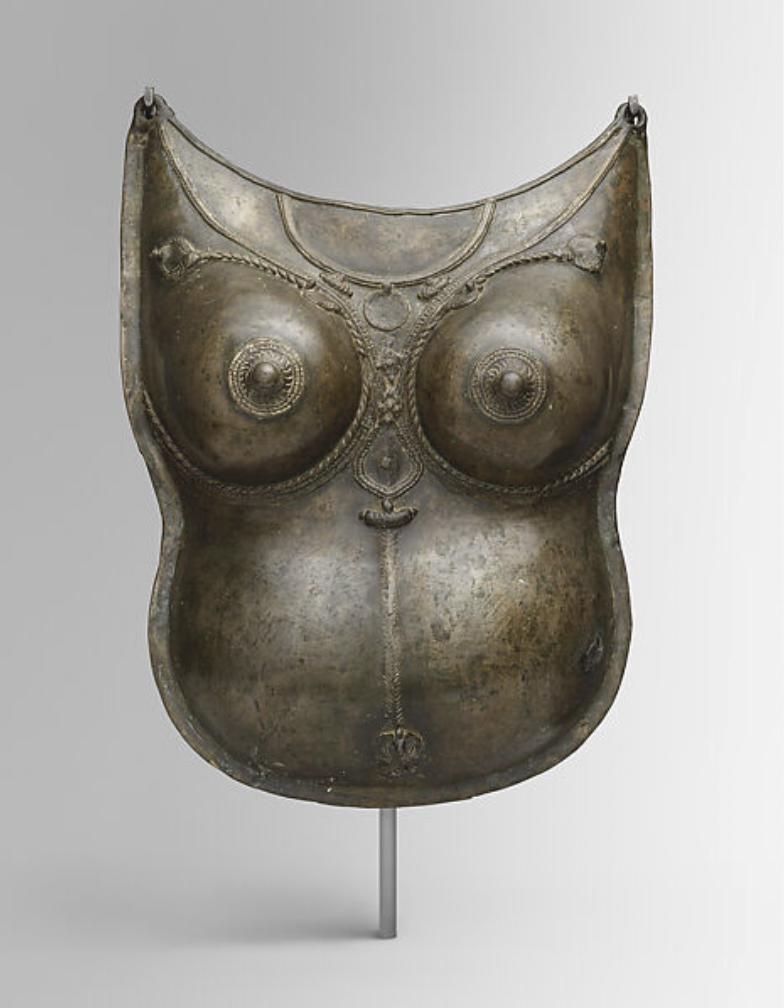
A bronze breastplate of the spirit deity, Jumadi
6120
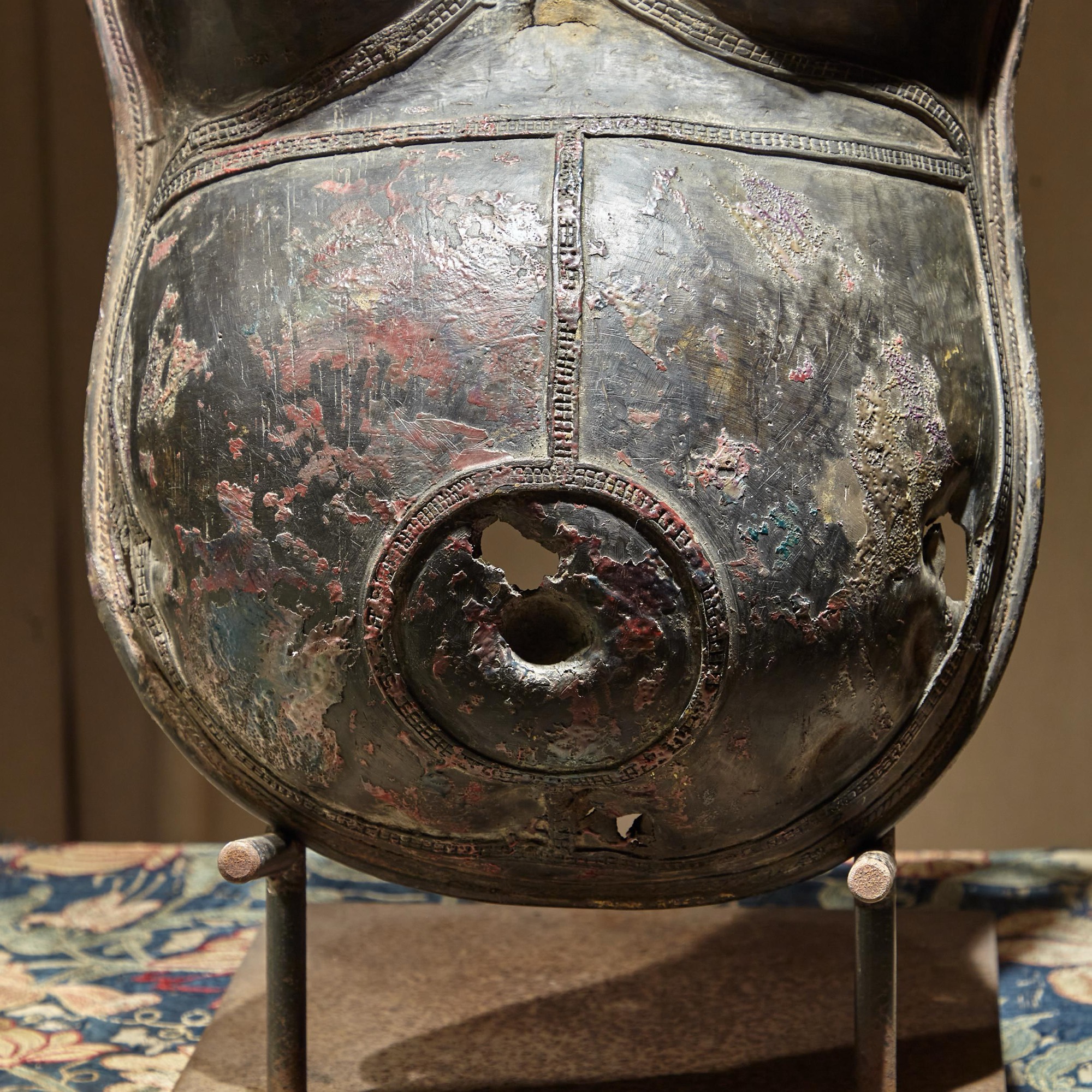
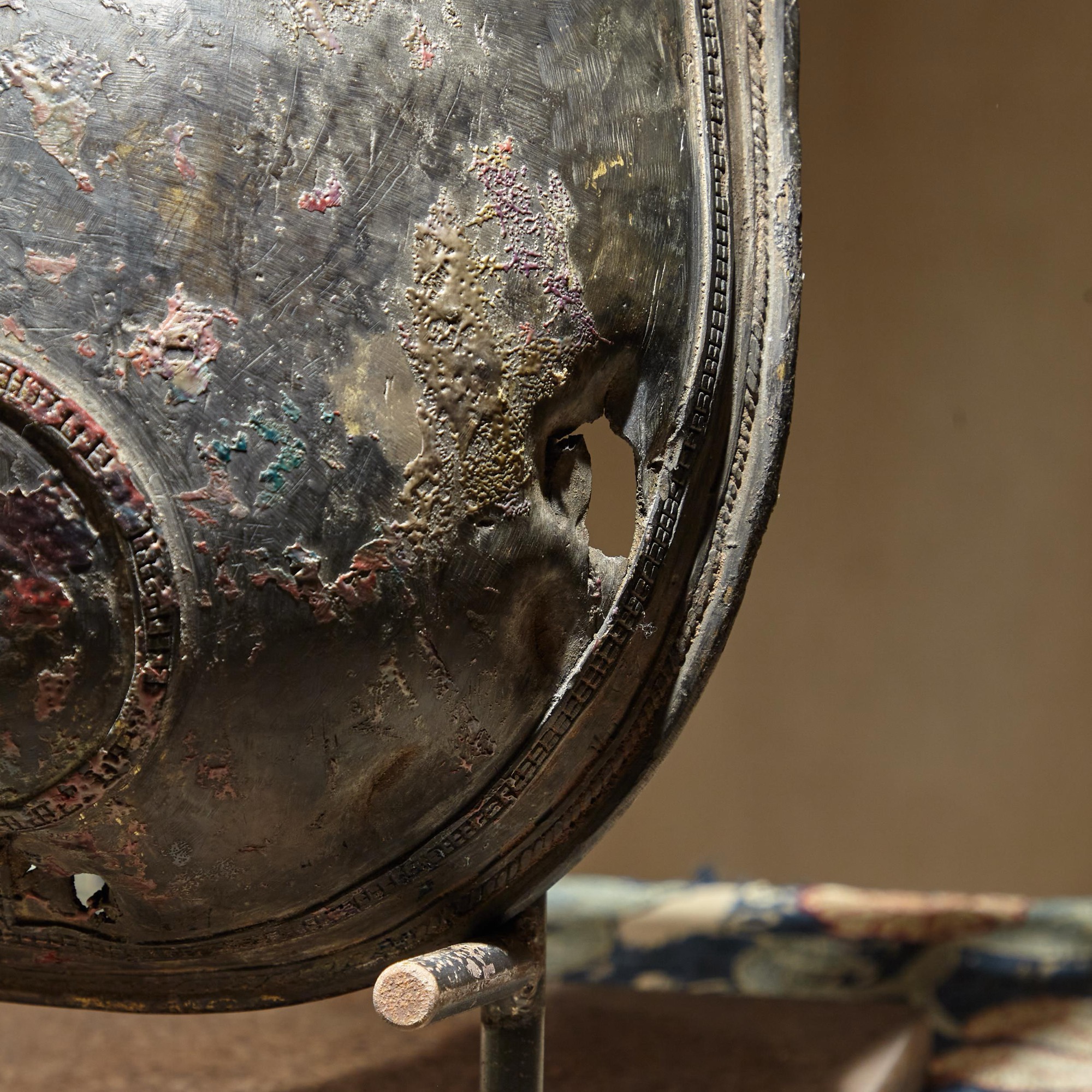
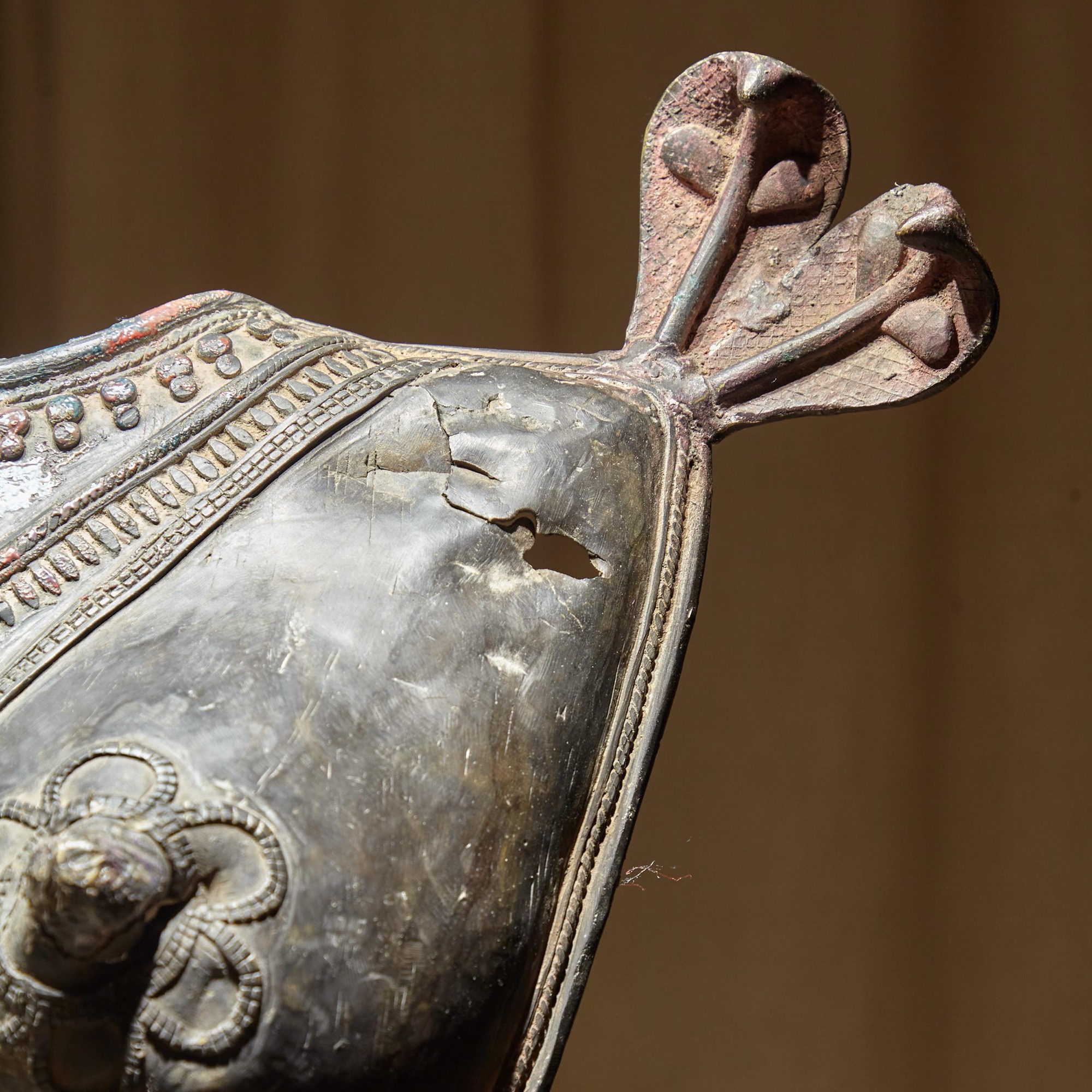
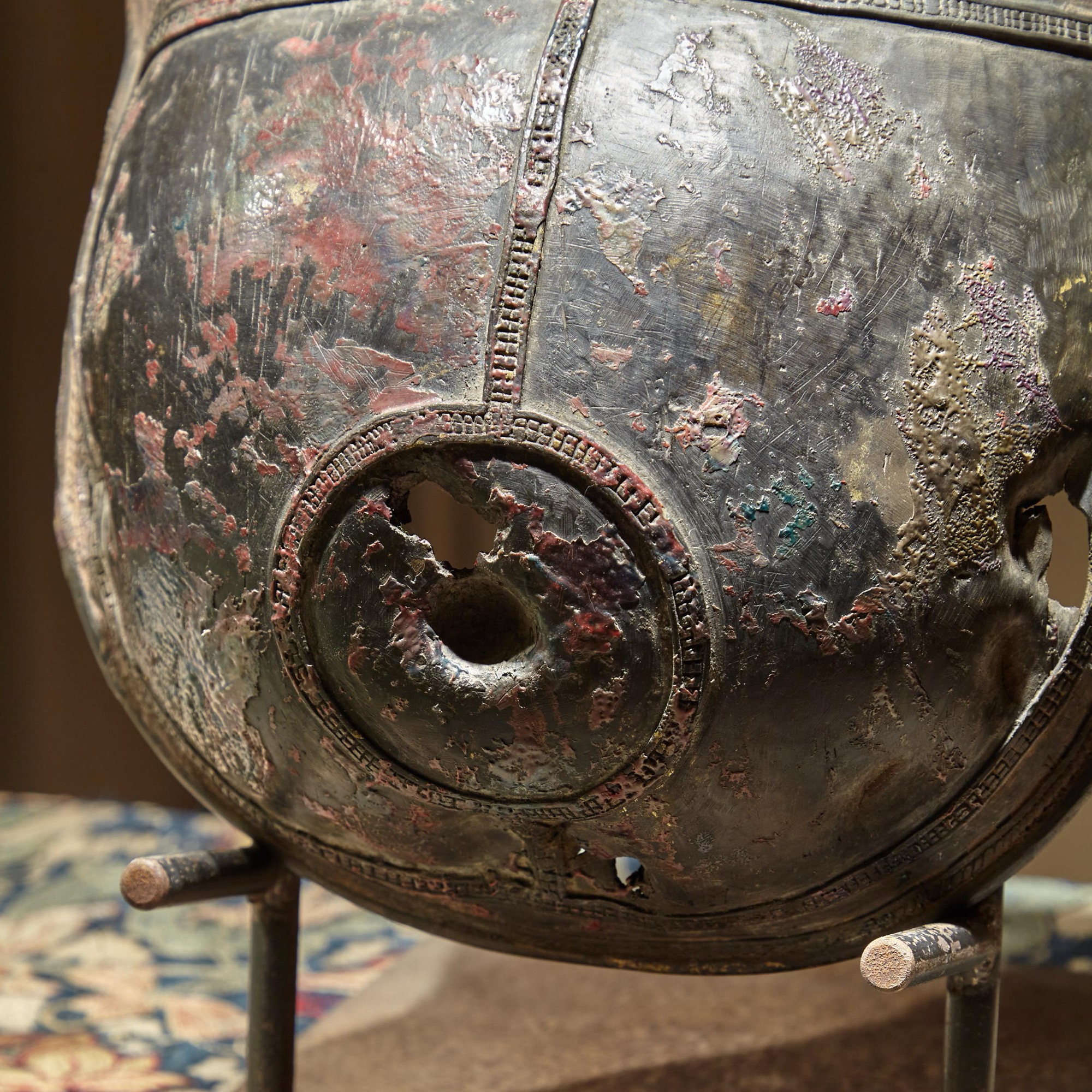
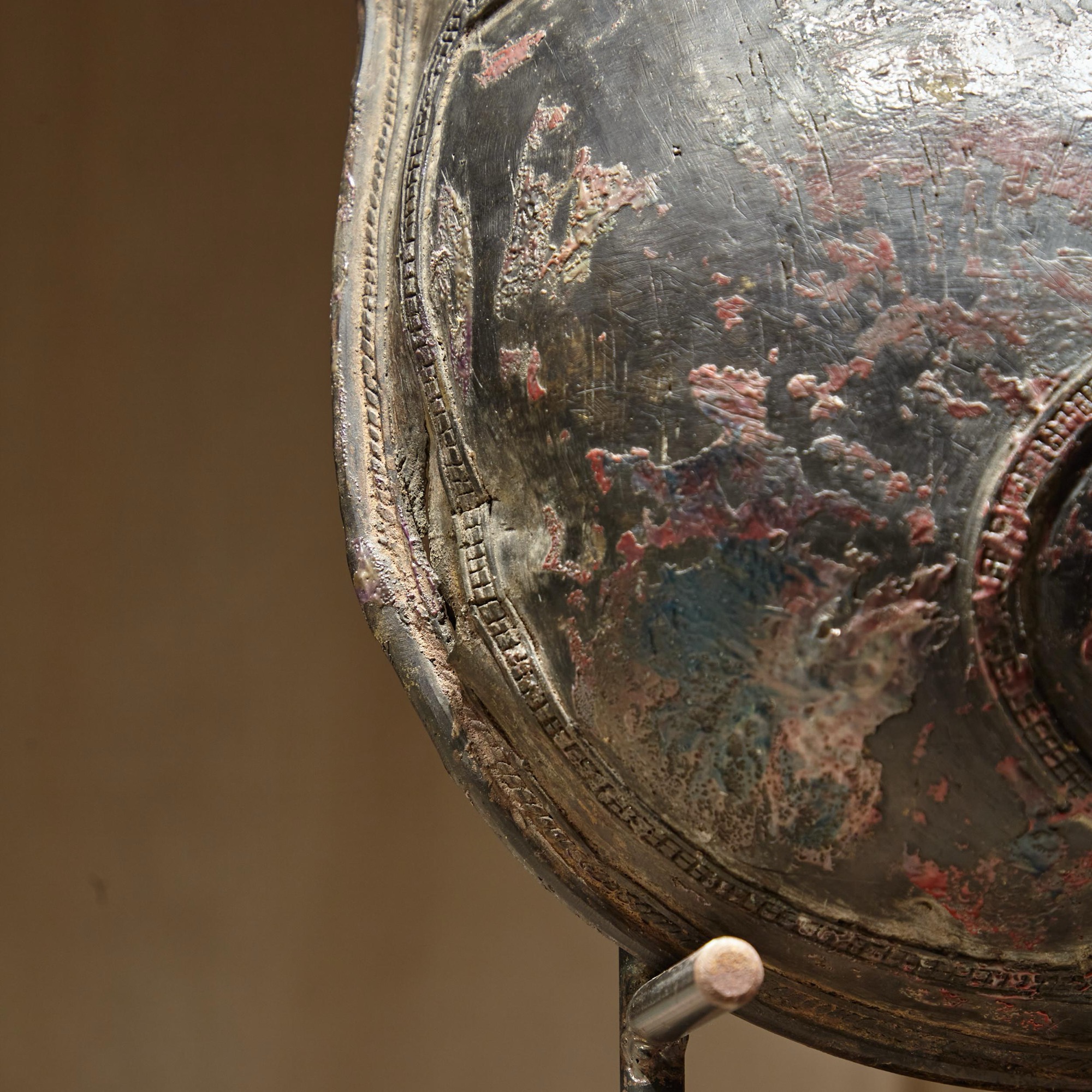
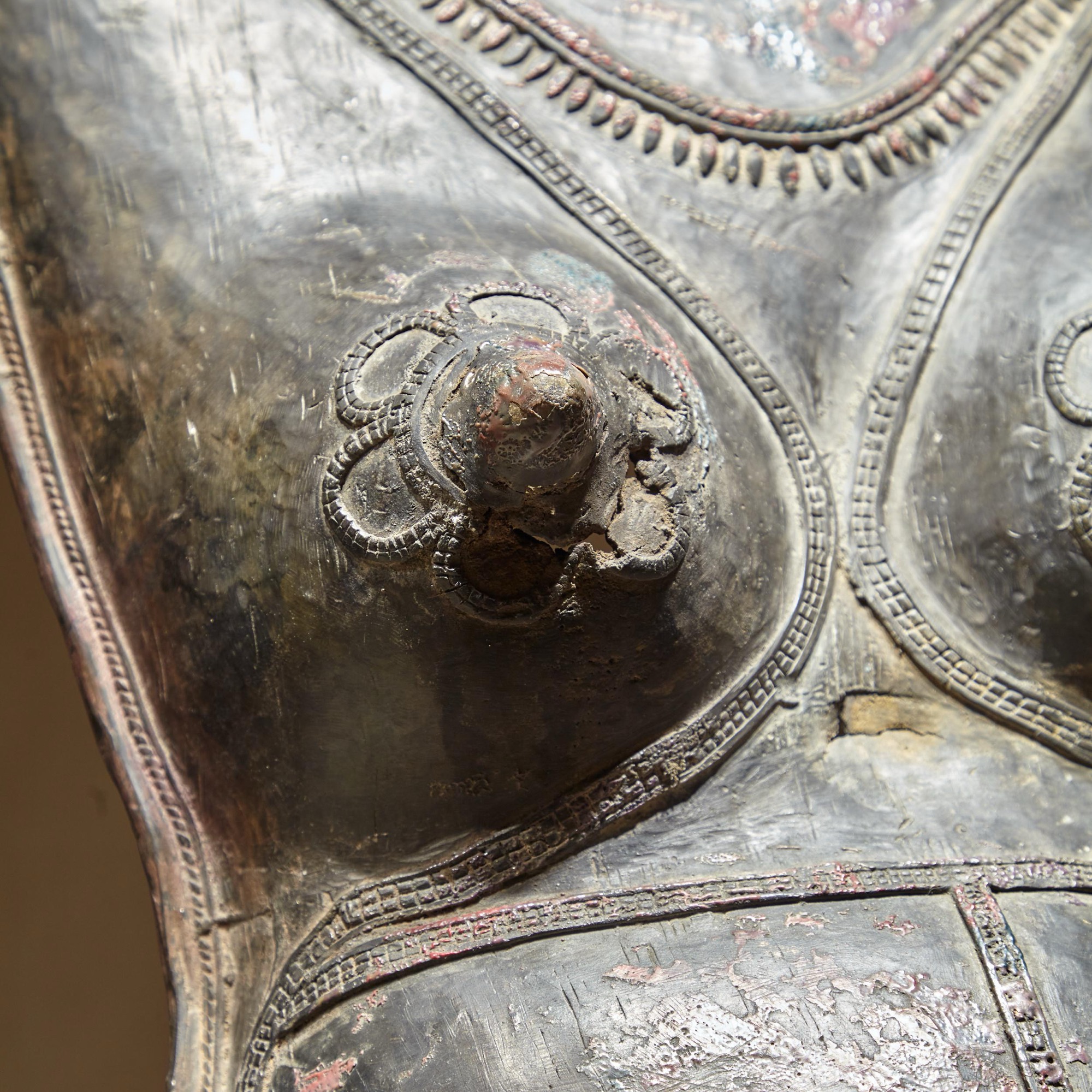
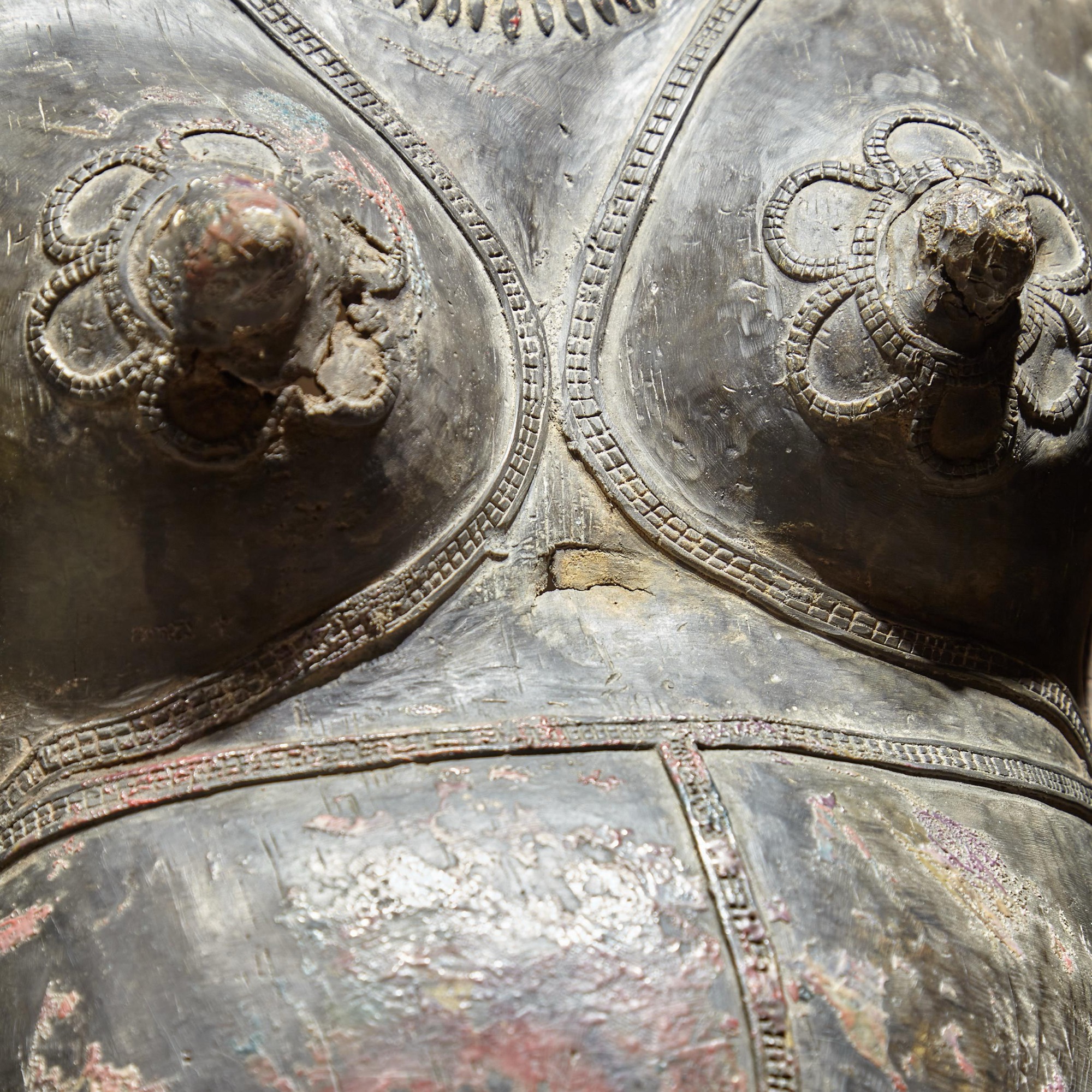
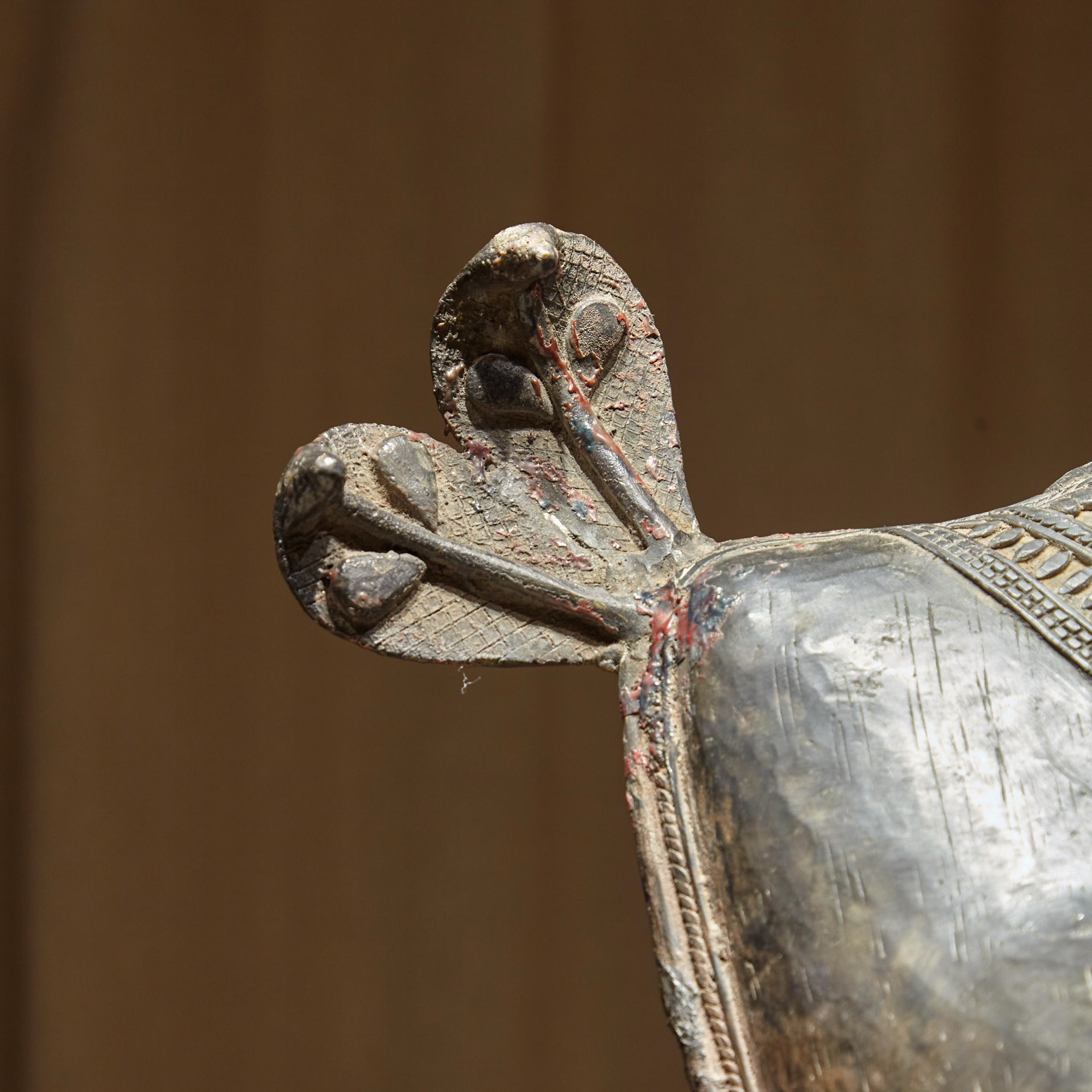
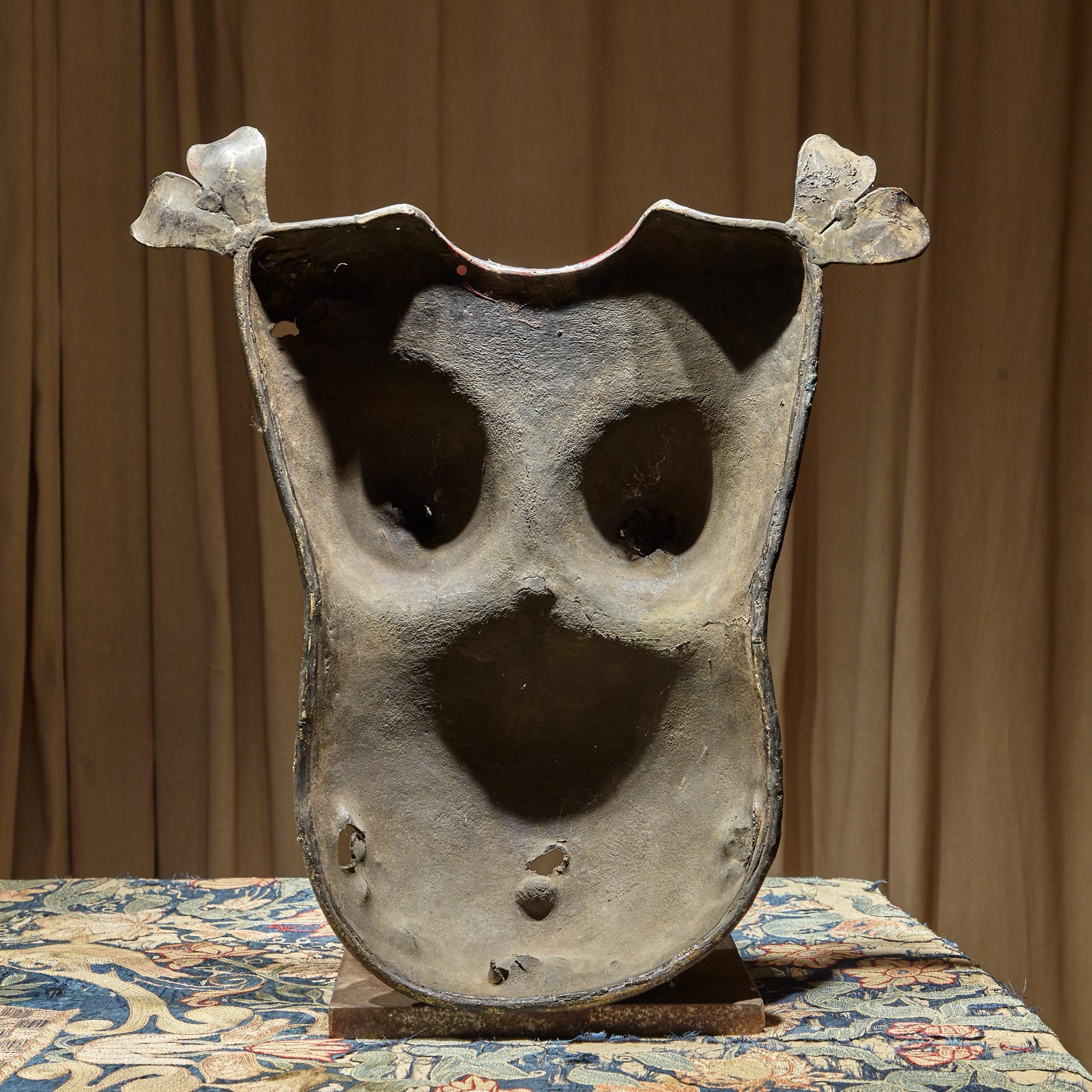
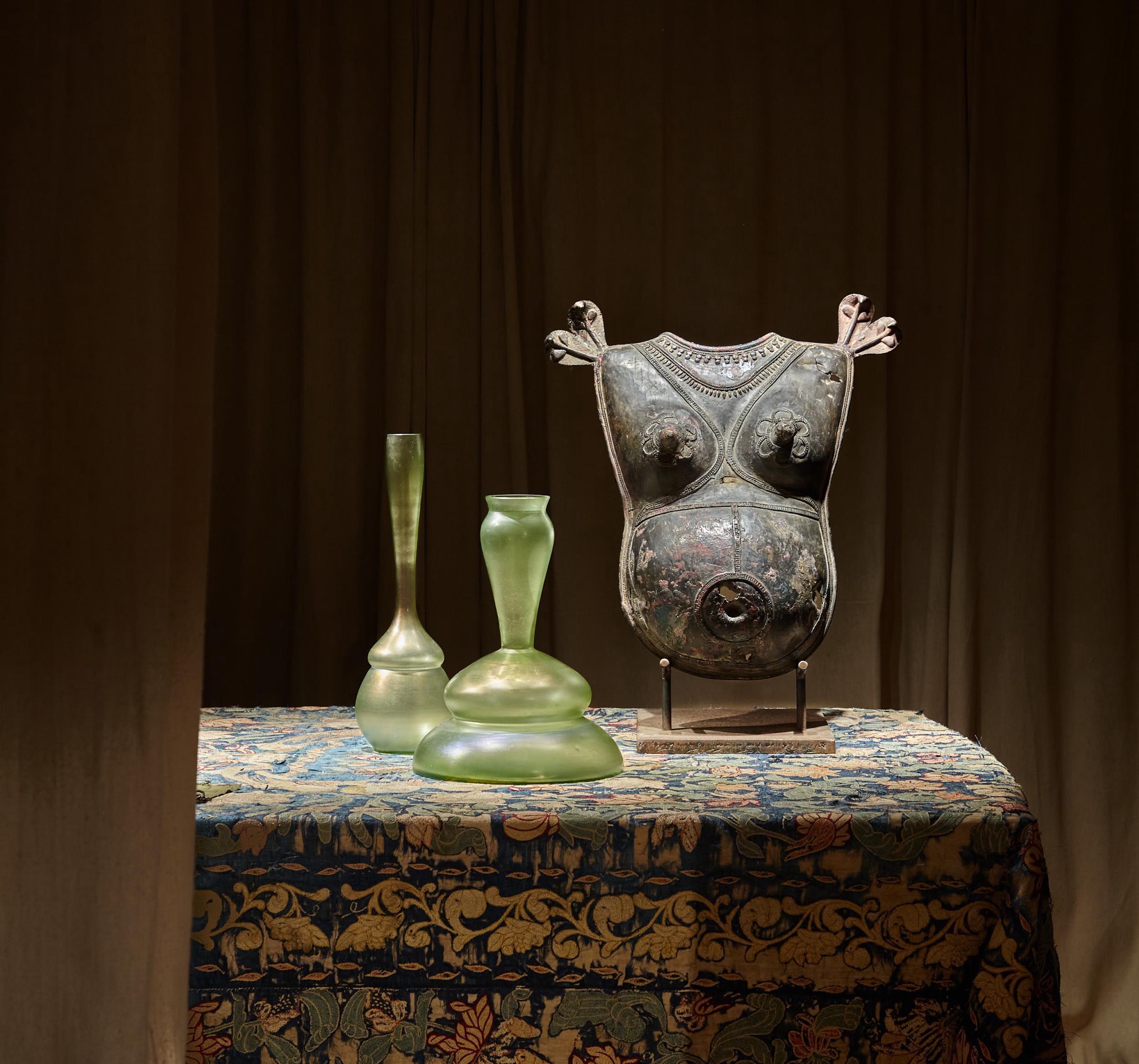
Formed as a female torso with protruding belly and breasts with double-headed serpents to the shoulders. Cast in the solid with a beautiful old patina and traces of polychrome colour.
Karnataka, Western India, late 19th century
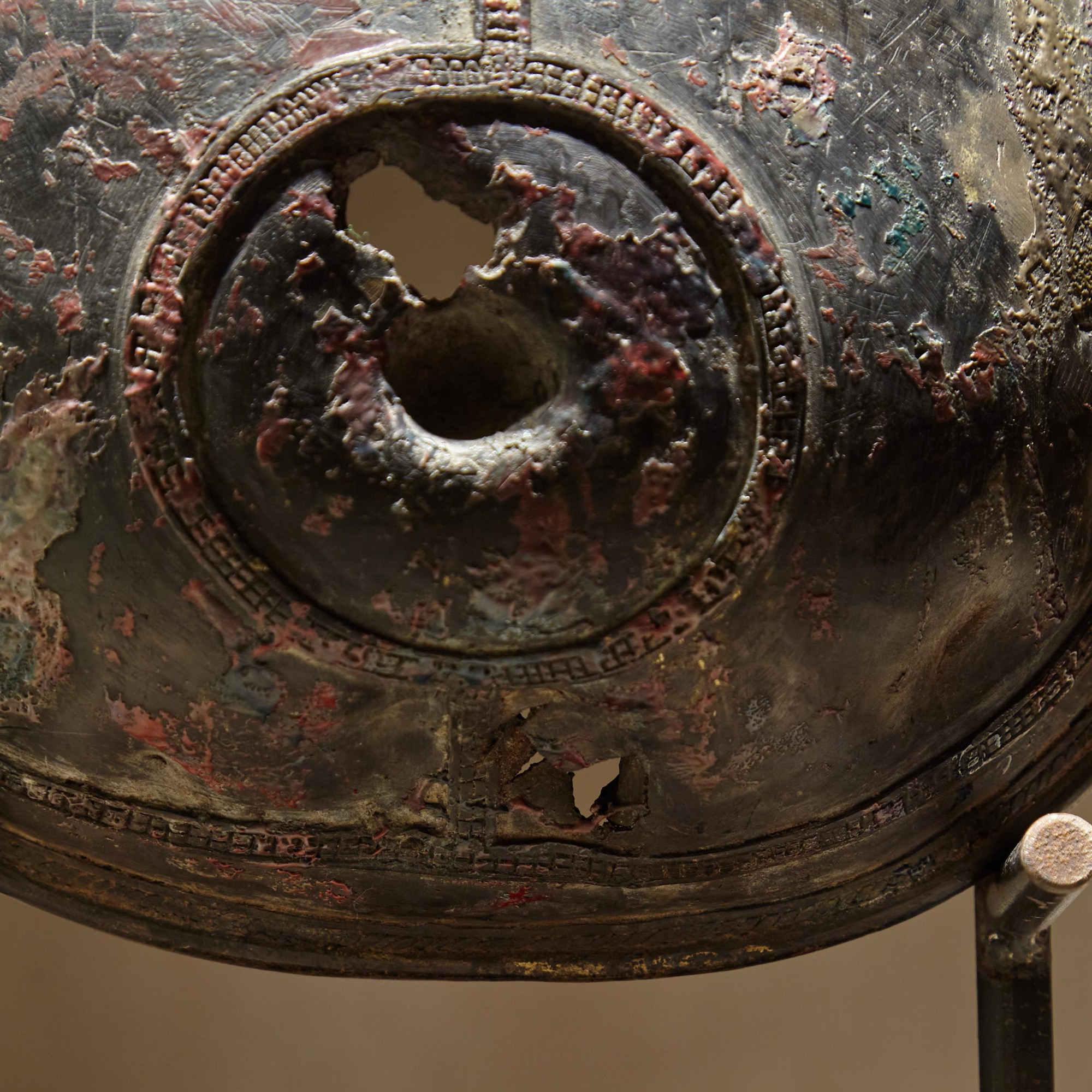
Condition: Dinks and dents throughout with pierced damage to the lower section. Traces of pigment, likely thrown during festivals
This female breastplate, representing a mother-earth deity, was worn by shamanic priests during the annual spirit-possession festivals of Tulu-speaking communities along the coastal region of Karnataka. It demonstrates the refined skill and inventive capacity of rural Indian metal-casters, whose work fulfilled the devotional requirements of diverse local traditions.
The torso is modelled with pronounced breasts and a smoothly rounded abdomen, signifying fertility and the generative potential of the deity. The surface is ornamented with beaded necklaces and incised floral motifs. At the upper edges, cast serpents form integral attachments, through which cords would have secured the breastplate during ritual performance.
The origins of such adornments are likely to be ancient, with earlier examples probably made from perishable materials such as woven fibres and wood. The transition to cast metal remains difficult to date, and surviving examples do not appear to be of great antiquity. The manufacture of metal accoutrements for the annual bhuta festivals may be comparatively recent, associated with the Visvakarma communities - artisan groups traditionally engaged in metalwork and carpentry.
Some members of these communities developed expertise in metal casting, producing devotional images and ritual objects. They are thought to have been responsible for the creation and supply of metal paraphernalia used in bhuta worship. We do however know of a very early example of a Jumadi mask illustrated in a 1909 book called 'Castes and Tribes of Southern India' illustrated on pages 146 - 147.
The legend of Jumadi describes a man-eating asura named Dhumasura, which neither a man nor a woman could kill. Shiva and Parvati were invoked by their adherents, and then descended from Kailasha to slay the asura. On their way, Parvati felt hungry, and Shiva tried to satisfy her through various means, but she remained unsatiated. At last, Shiva offered himself, and ordered Parvati to swallow him. As Parvati swallowed him, Shiva's head did not pass beyond his consort's throat. Their bodies fused, in which the face of Shiva appeared with a moustache, below which was the neck and the body of Parvati. The deity's throat featured the lingam and wore a crown of nagas (snakes). This androgynous form of Shiva and Parvati slew Dhumasura in battle.
A similar example can be found in the Met Museum, New York (object number: 2022.2.)
Dimensions:
RELATED ITEMS








. This androgynous form of Shiva and Parvati slew Dhumasura in battle.A similar example can be found in the Met Museum, New York (object number: 2022.2.))