
A large Regency faux rosewood curule stool in the manner of George Smith (1786 - 1828)
A large Regency faux rosewood curule stool in the manner of George Smith (1786 - 1828)
6076
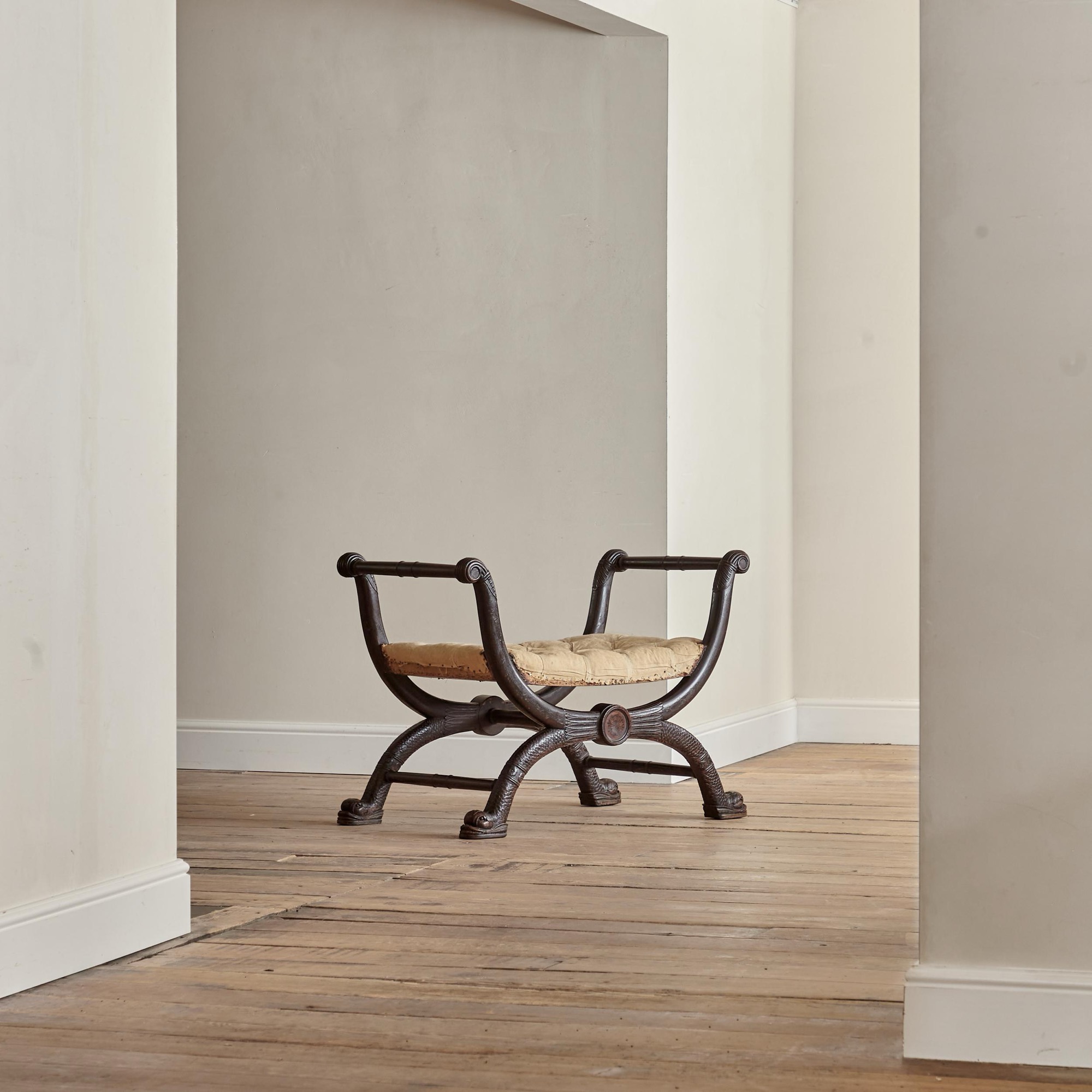
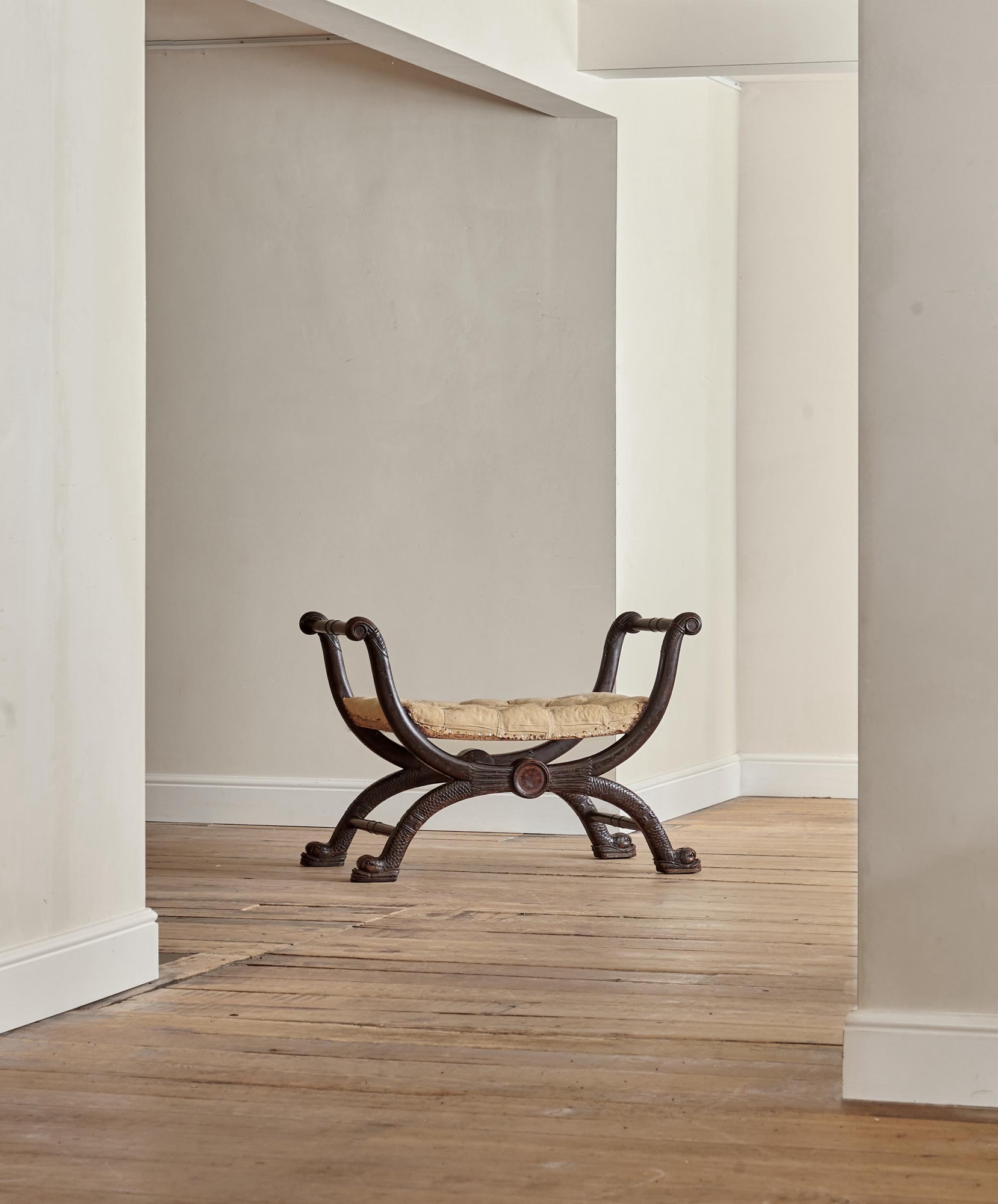
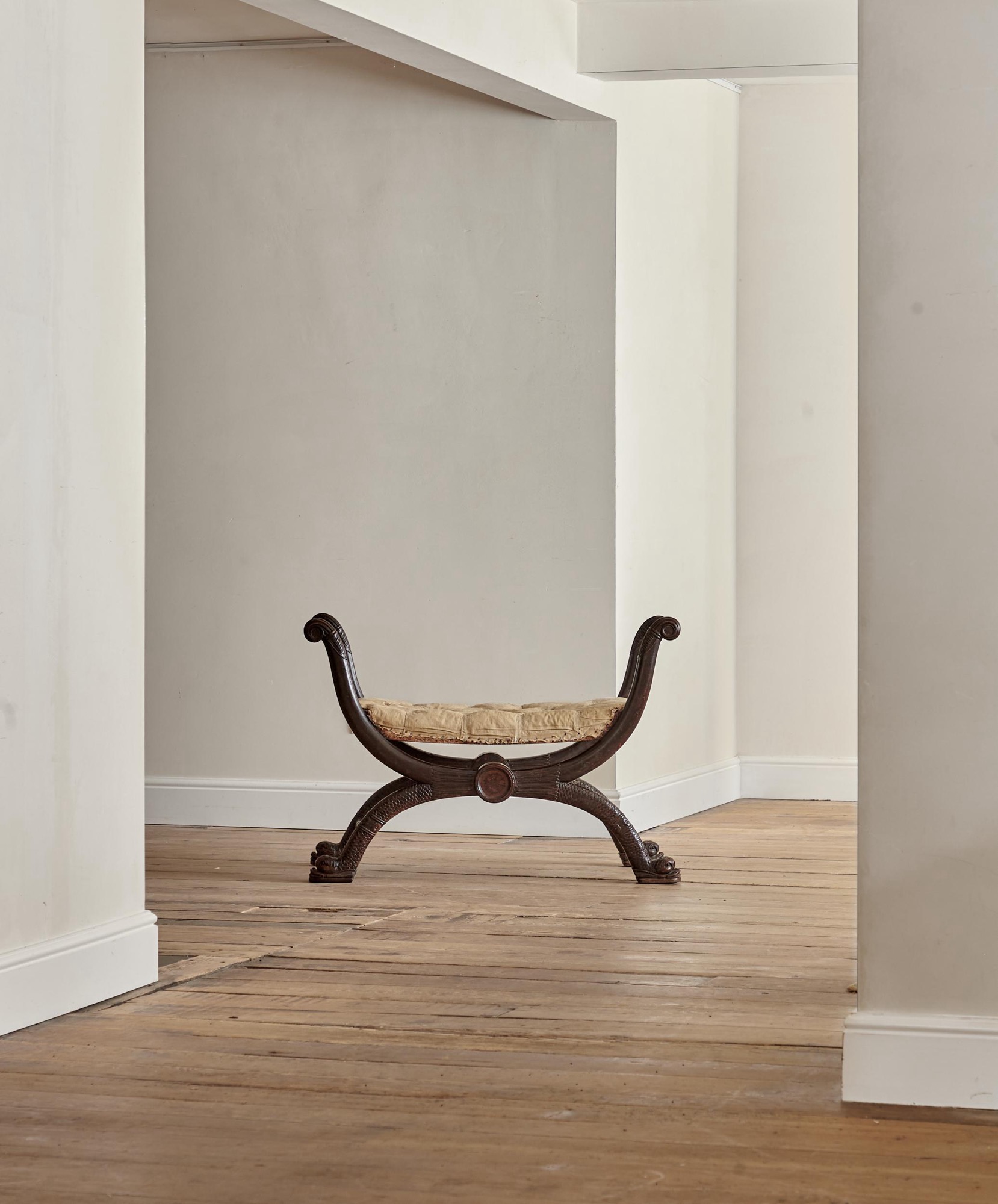
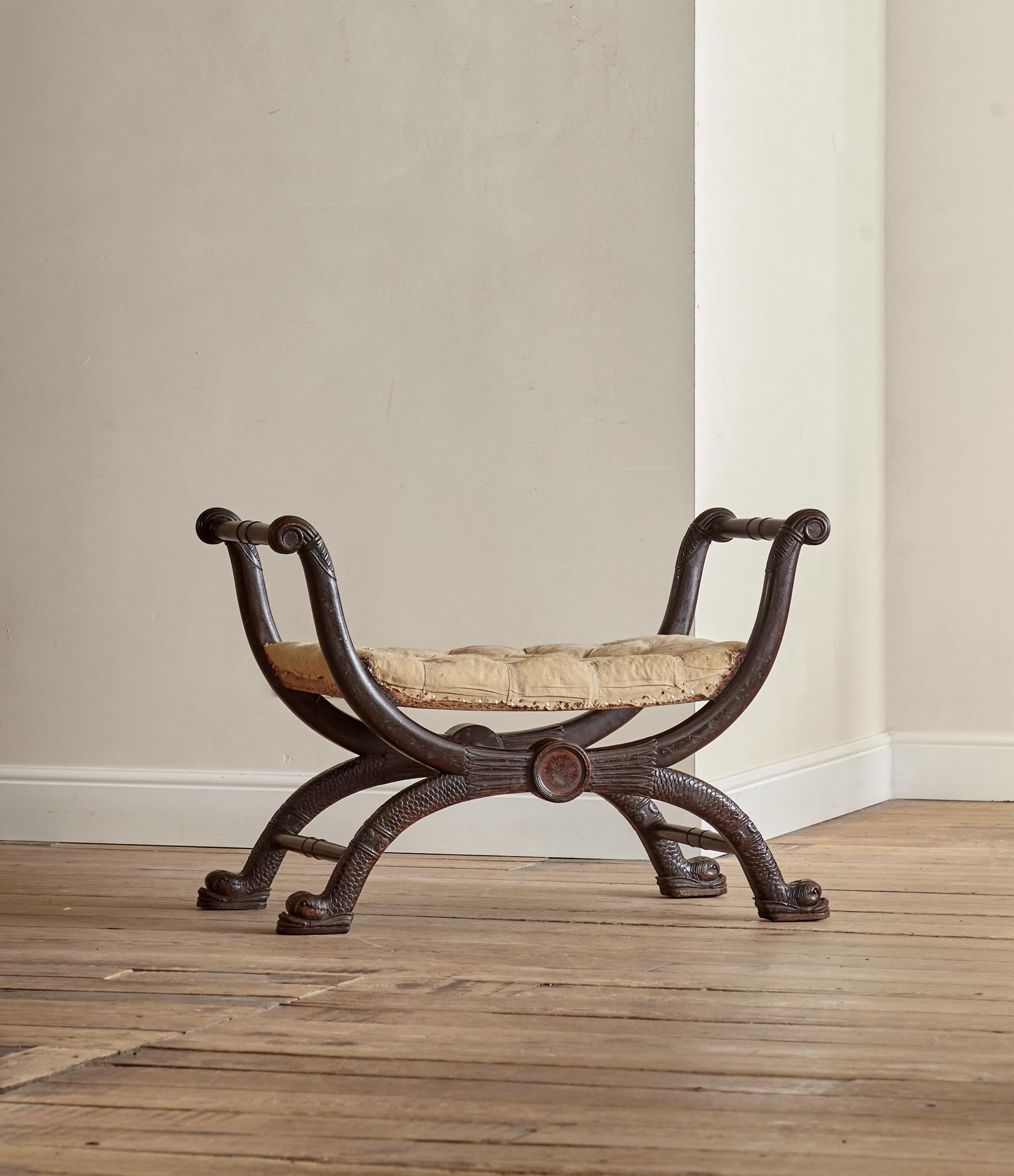
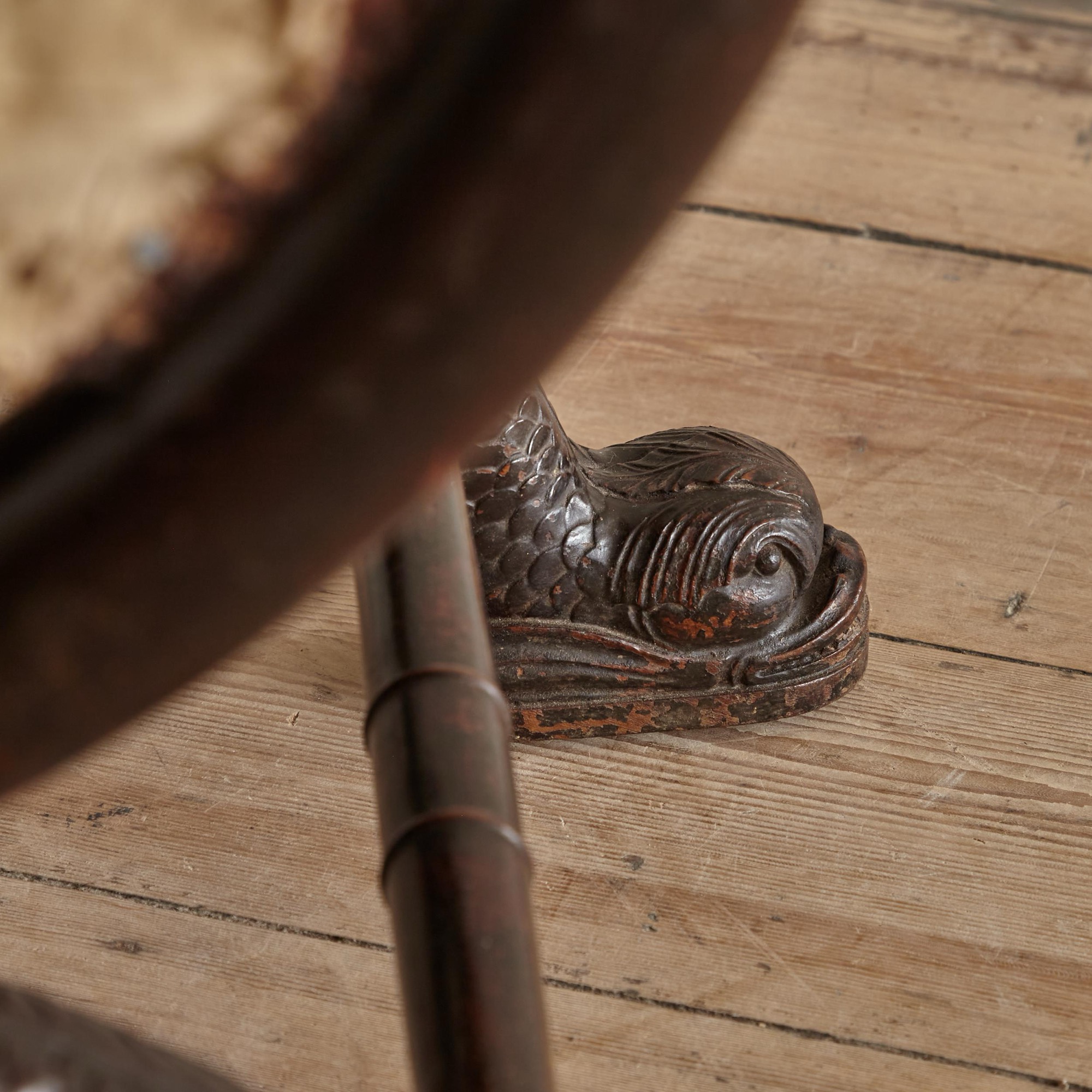
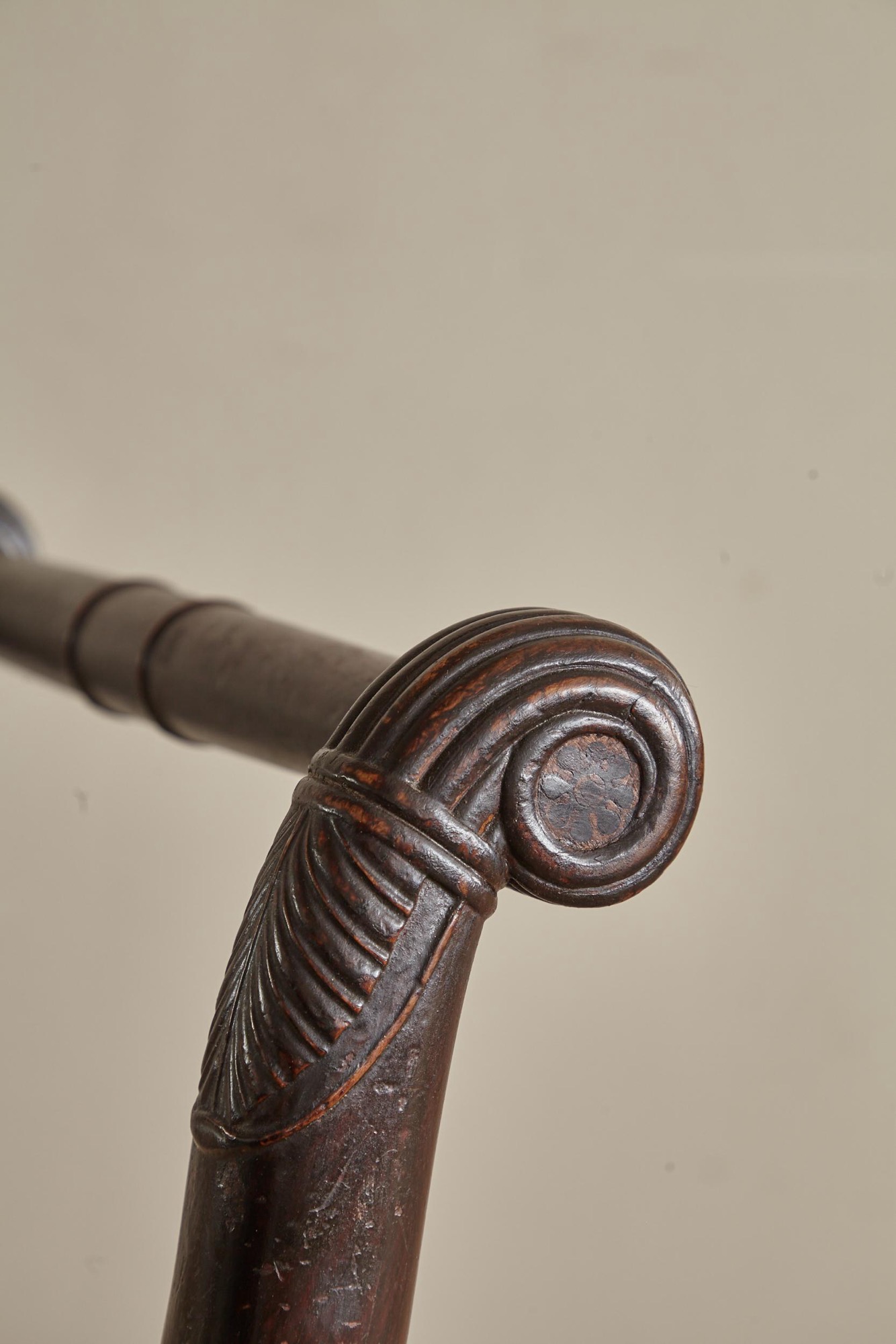
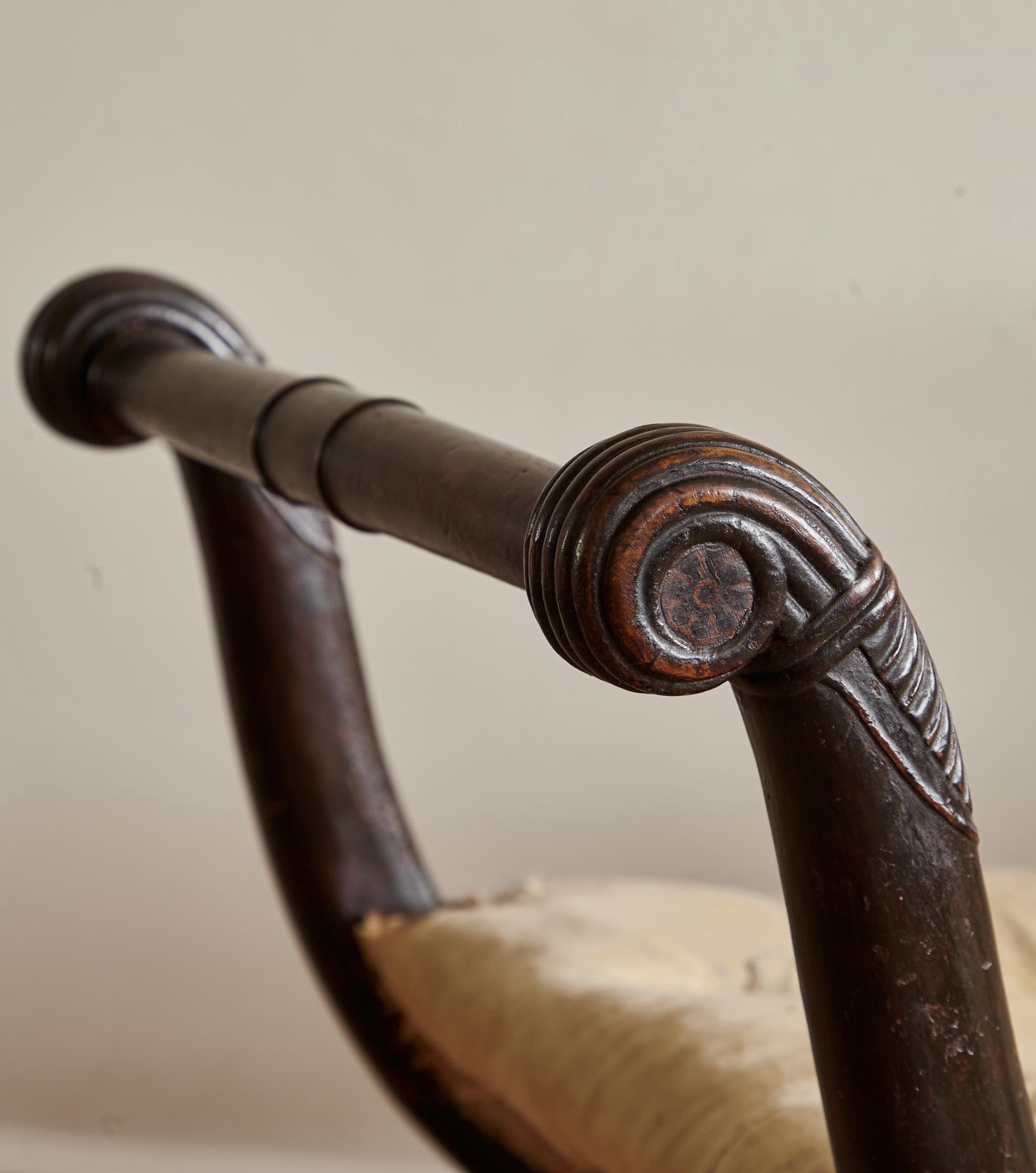
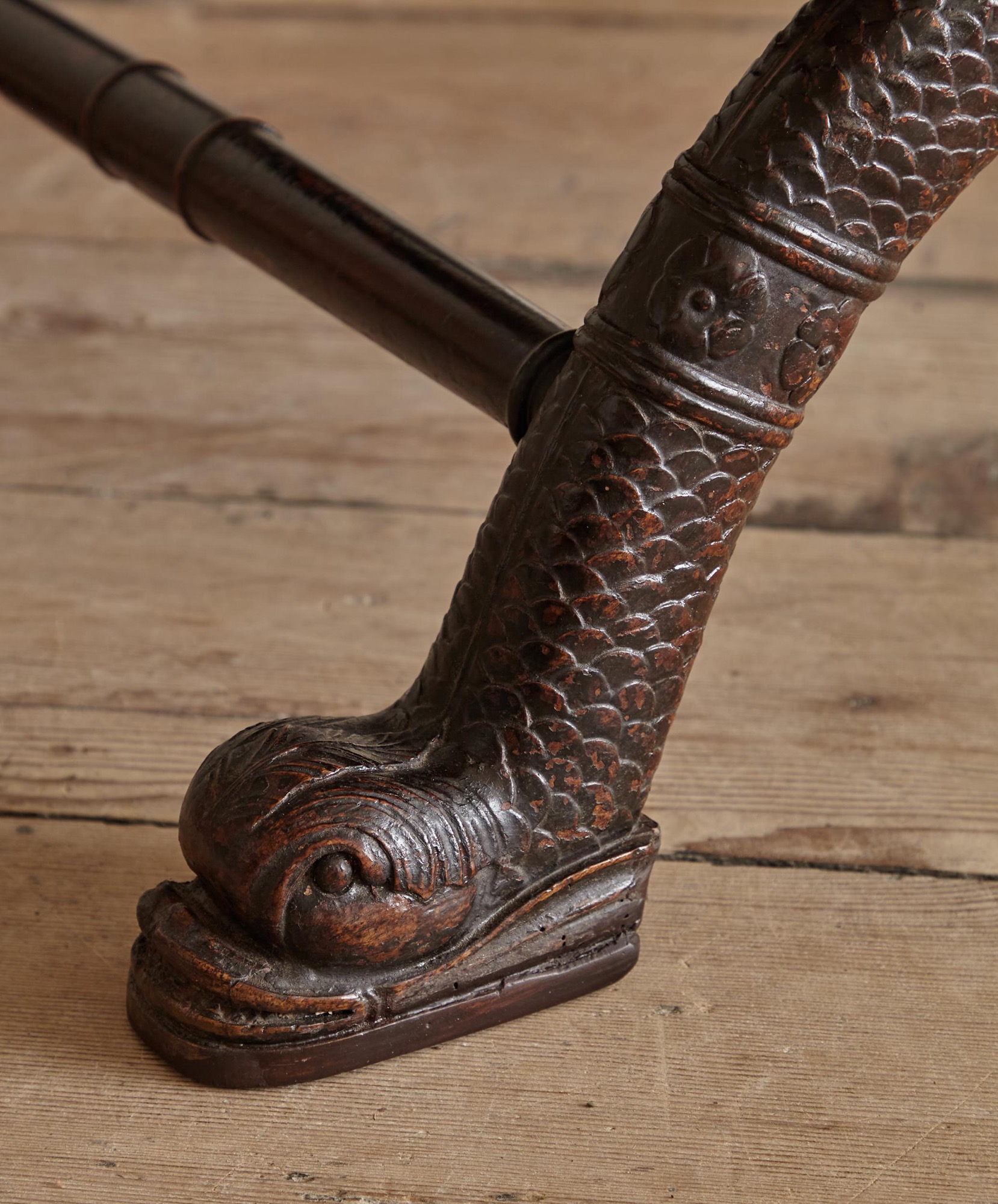
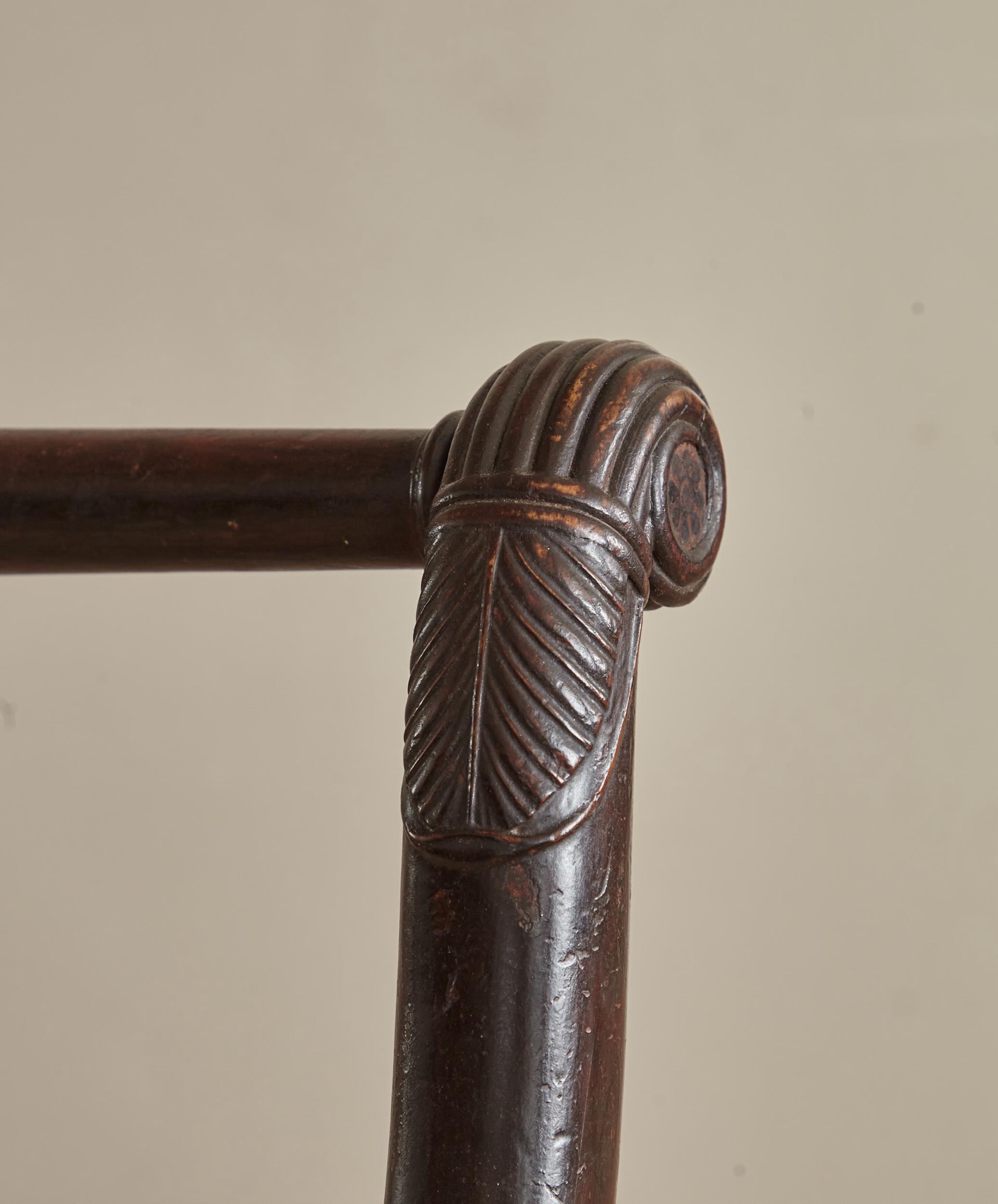
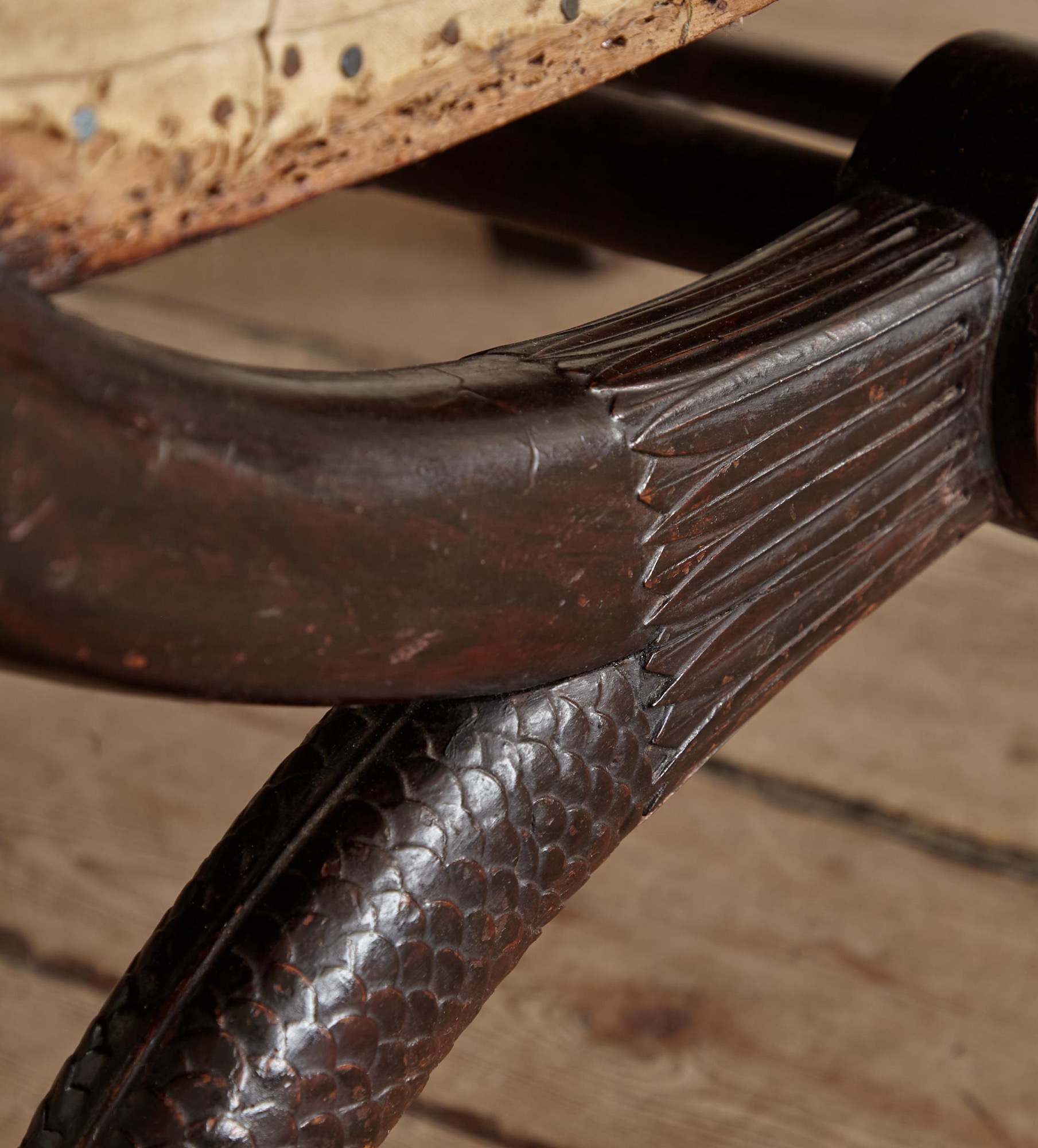
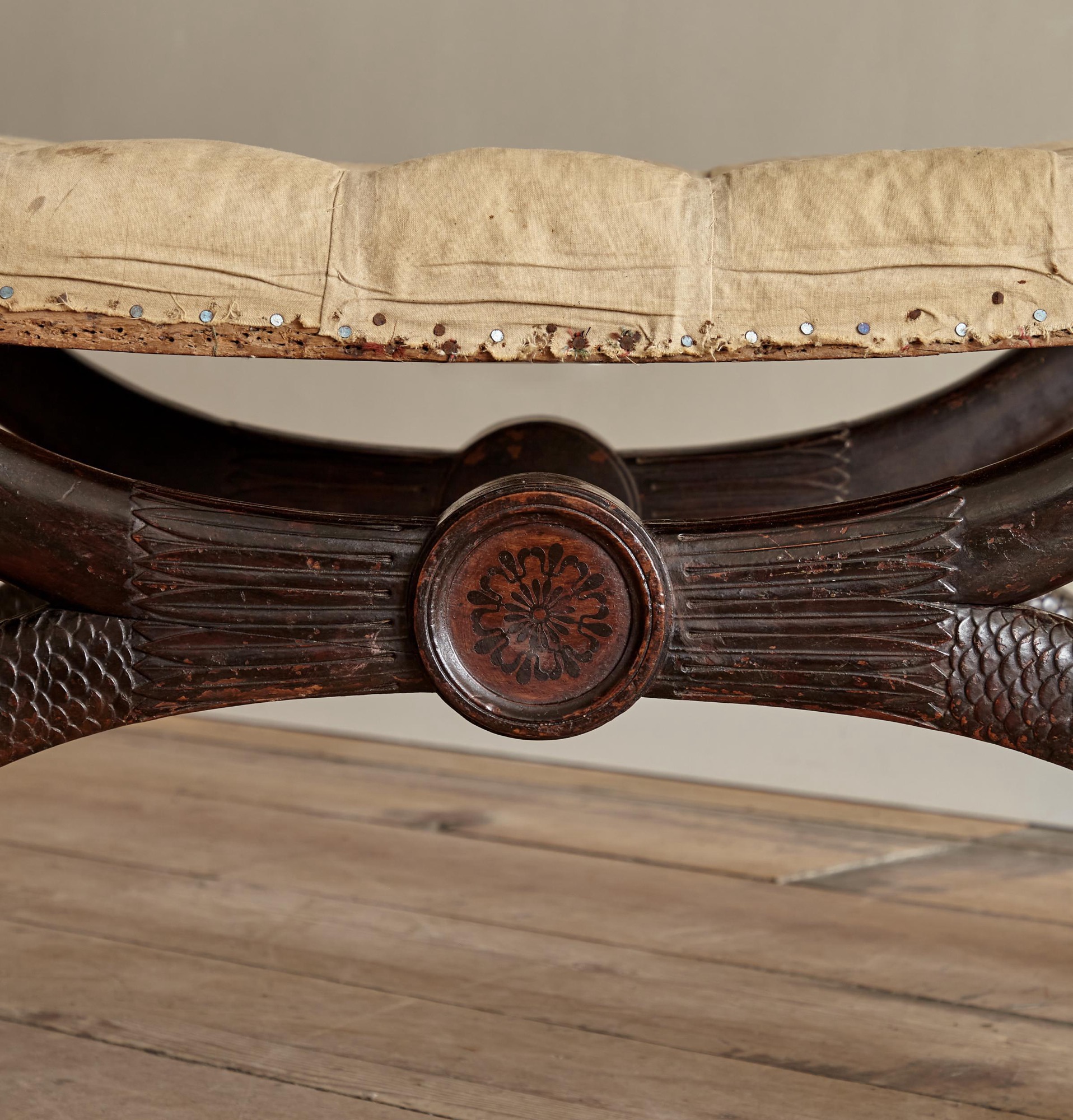
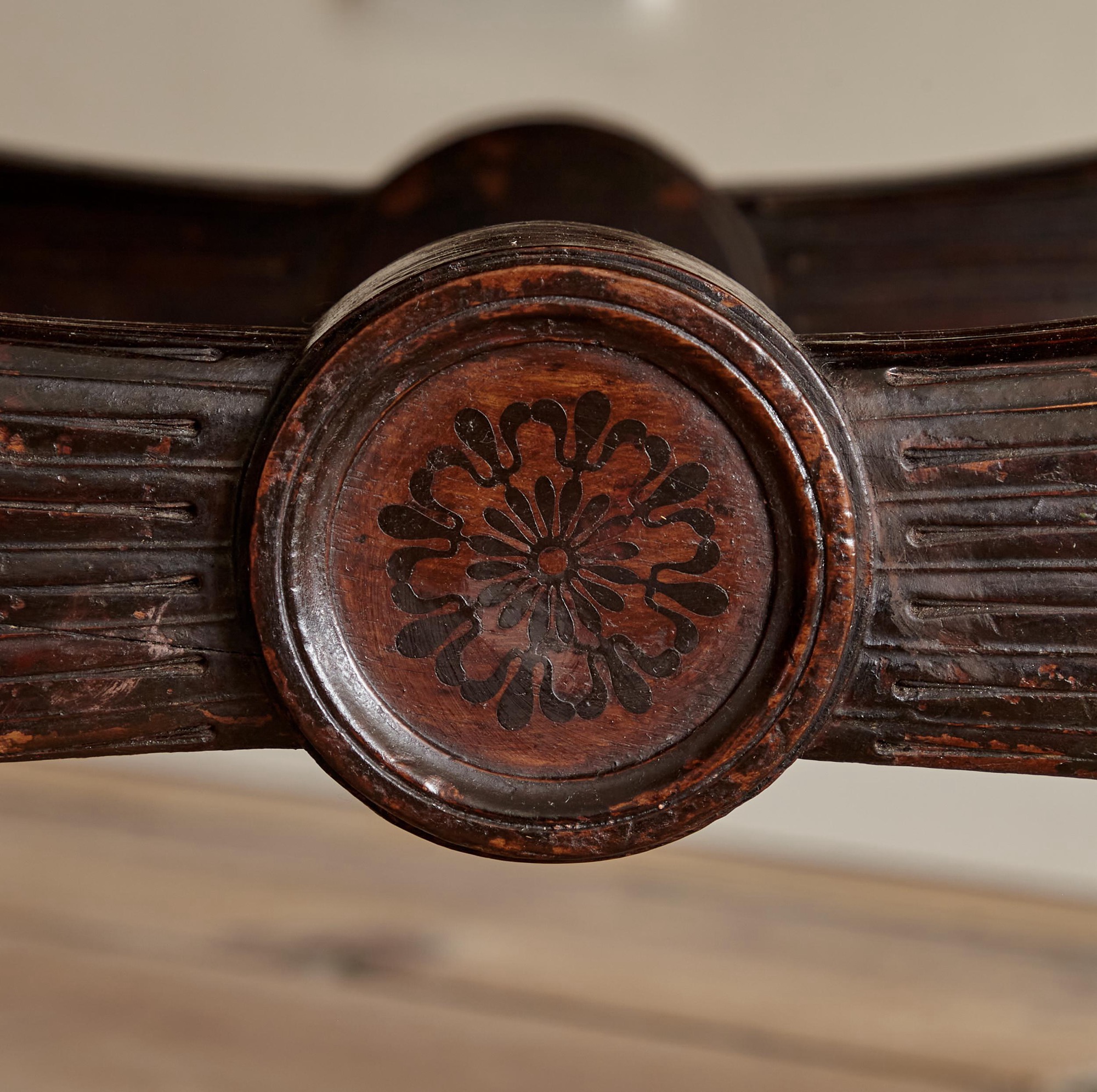
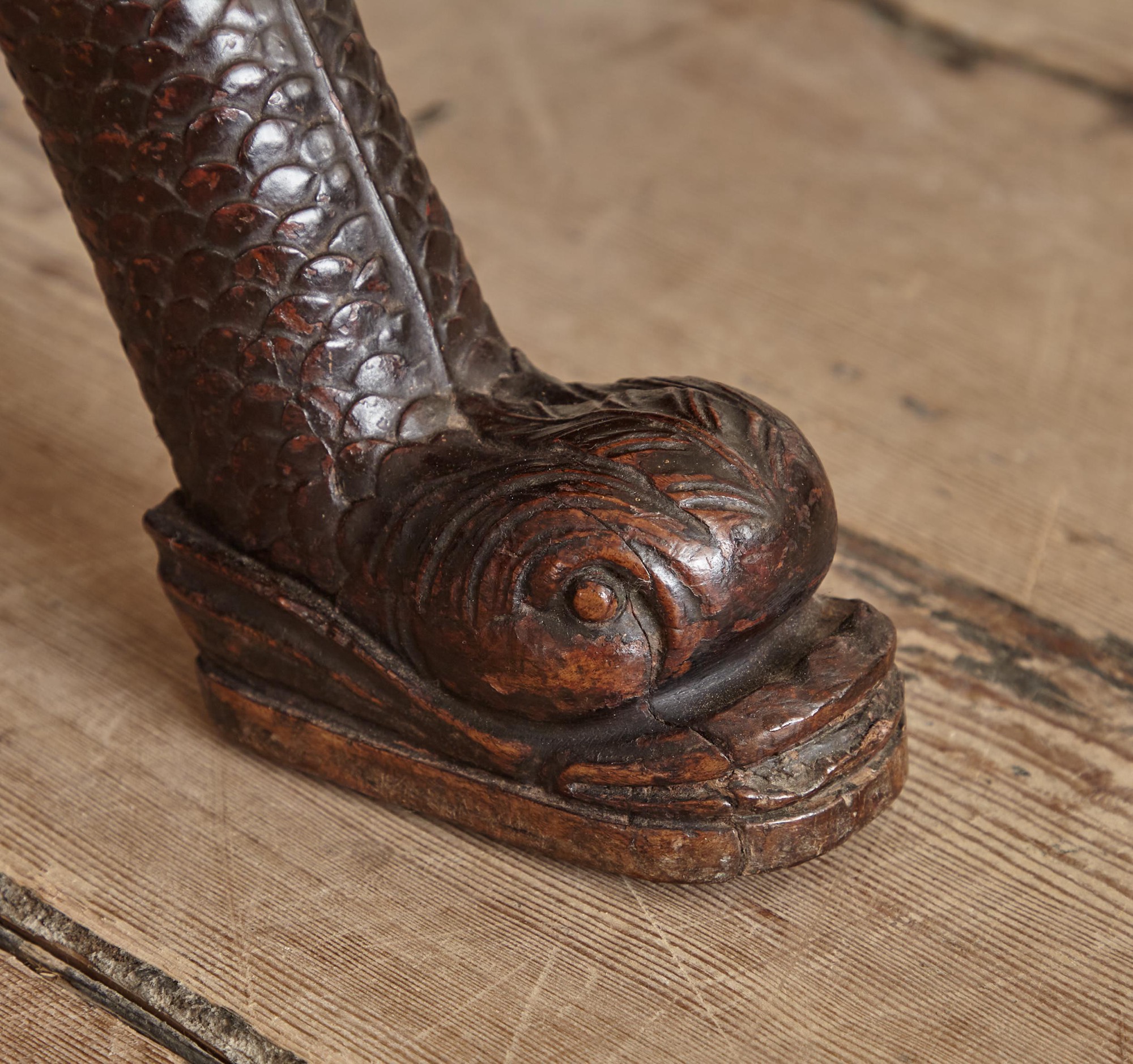
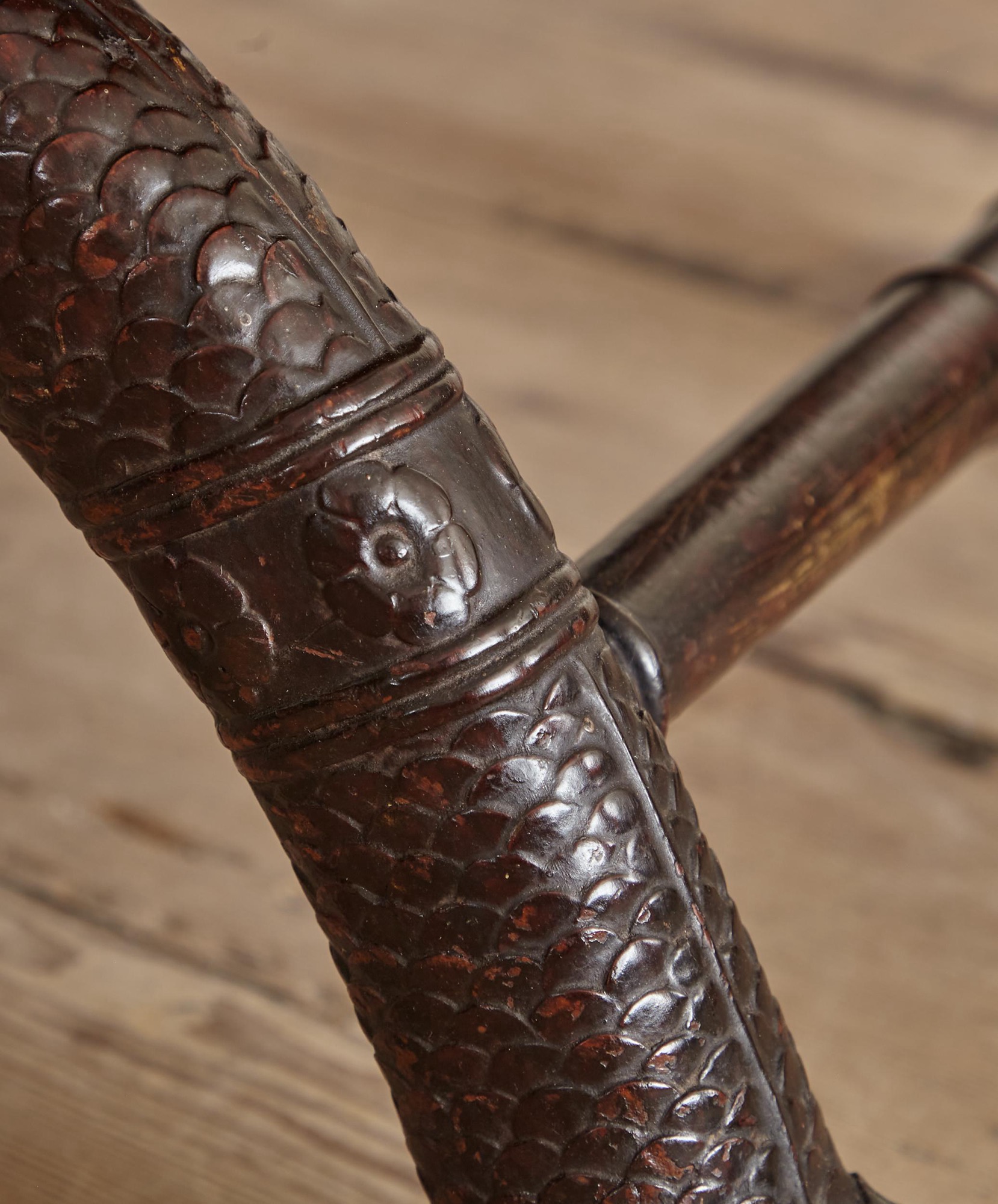
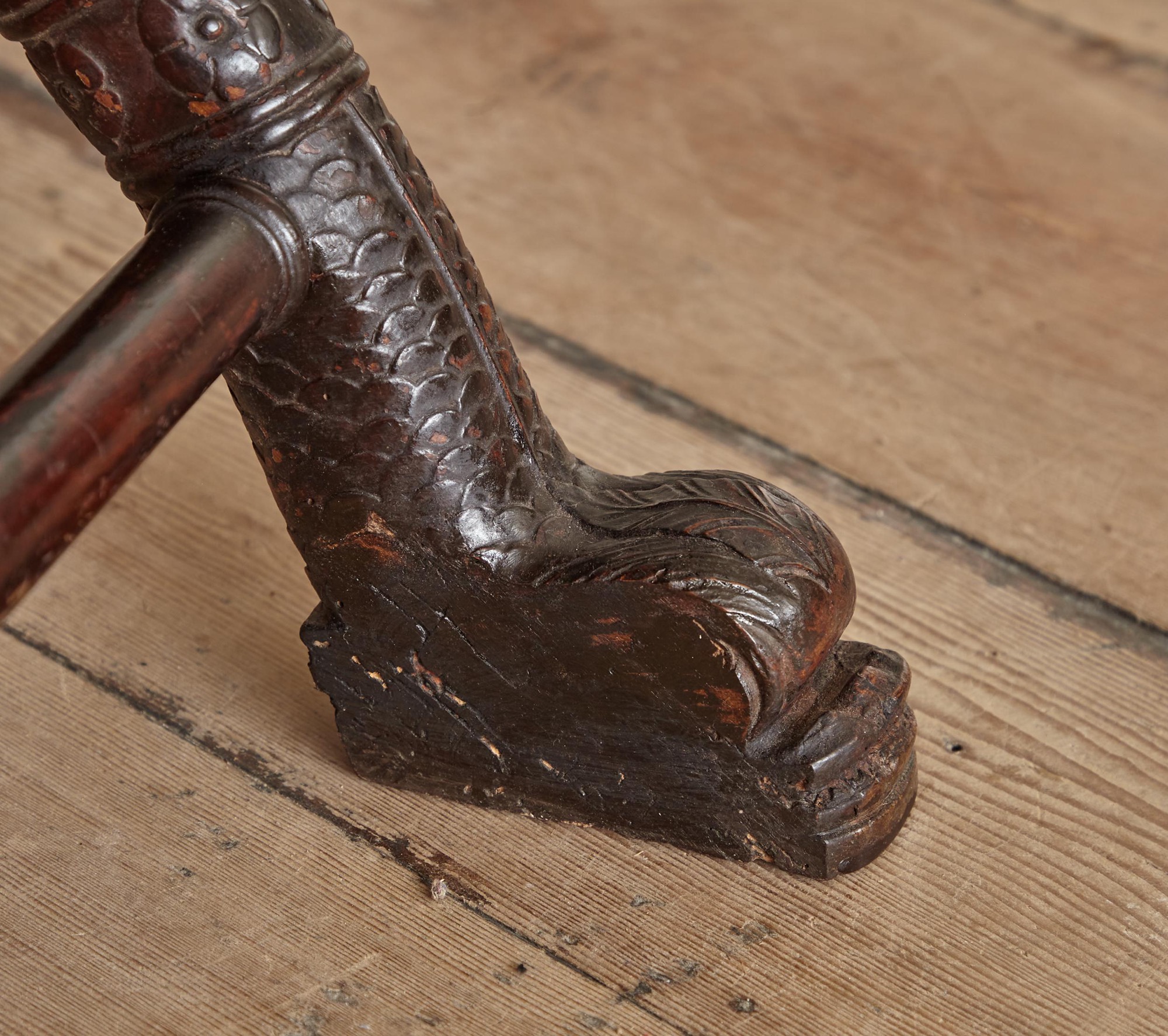
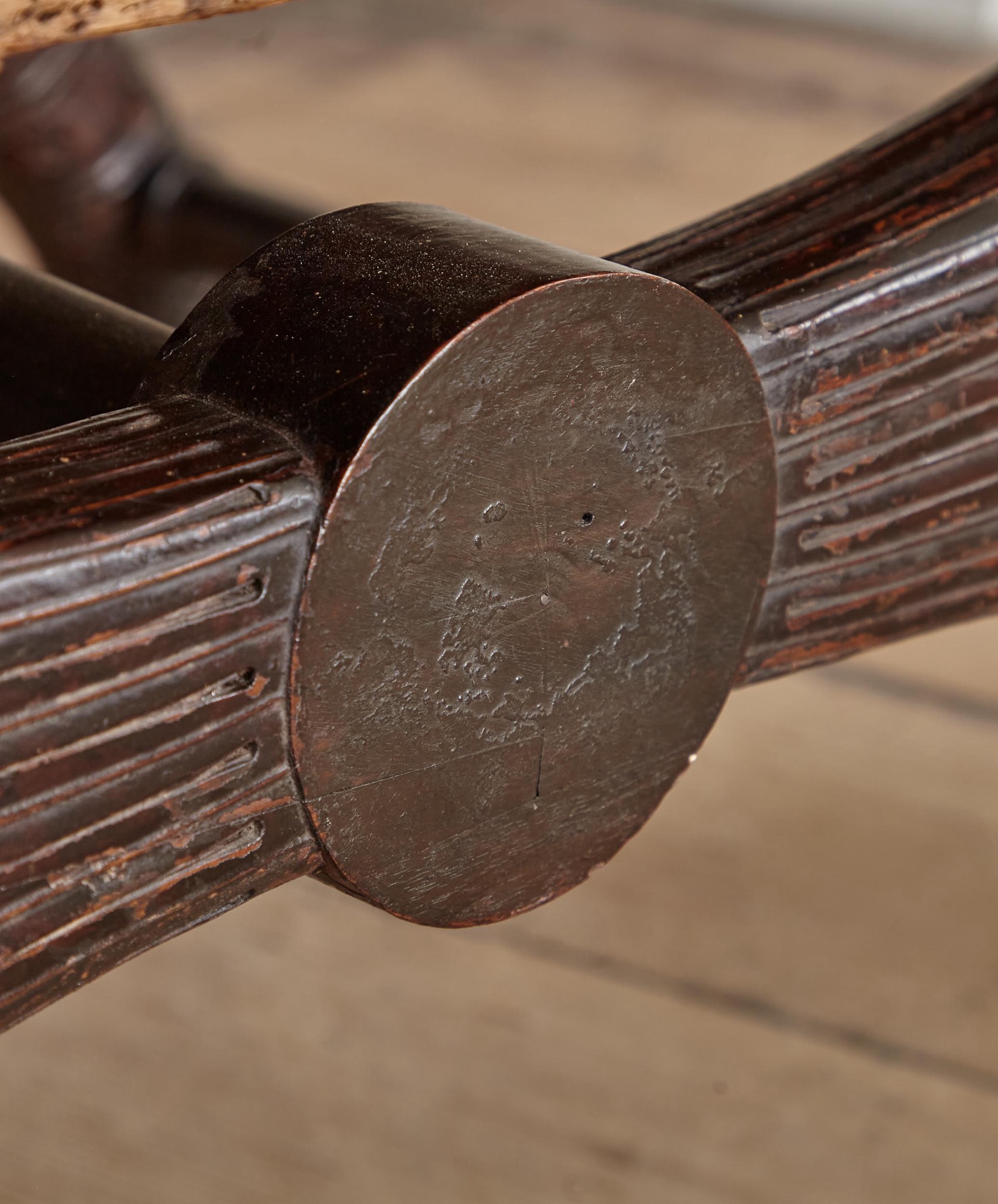
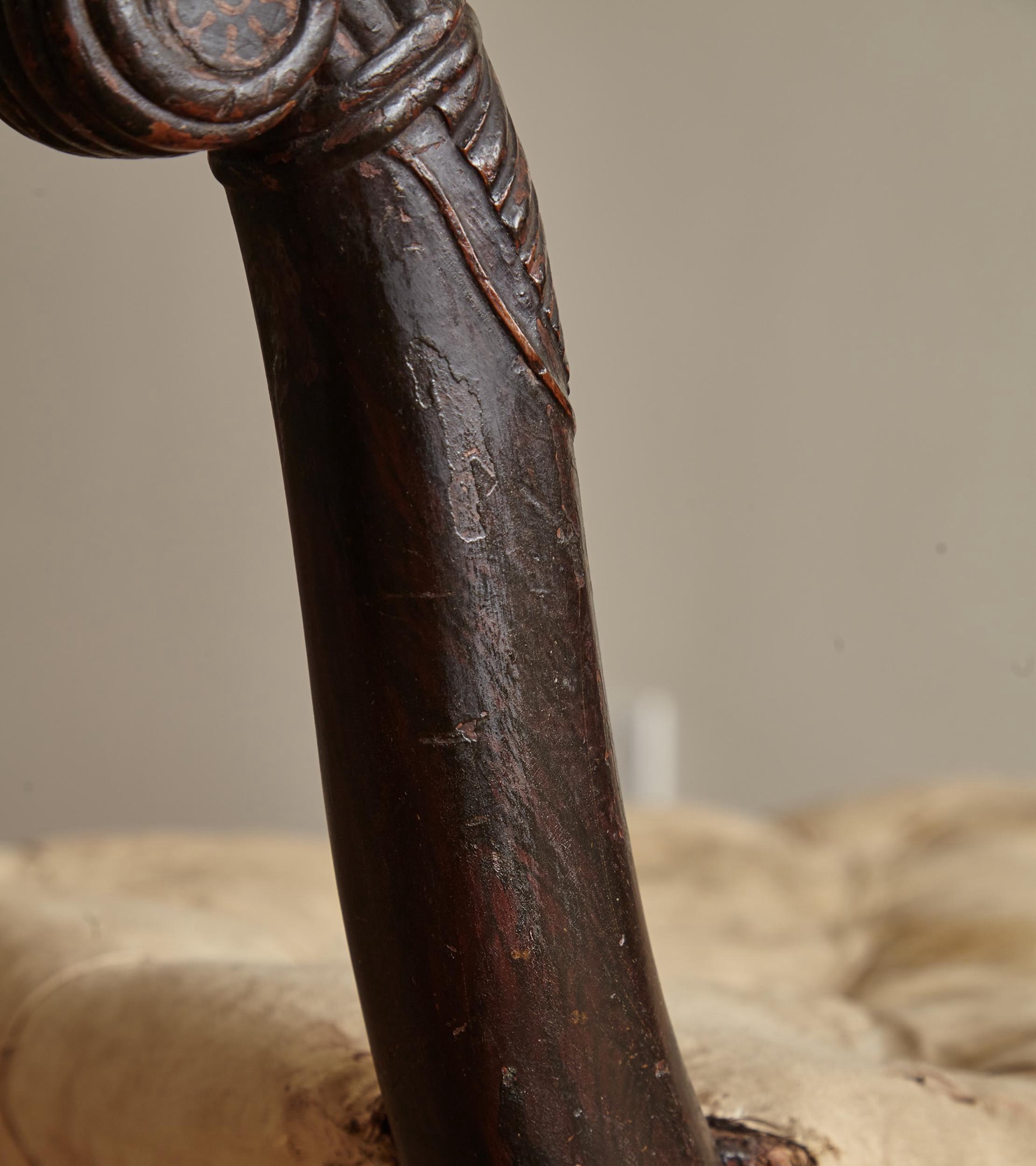
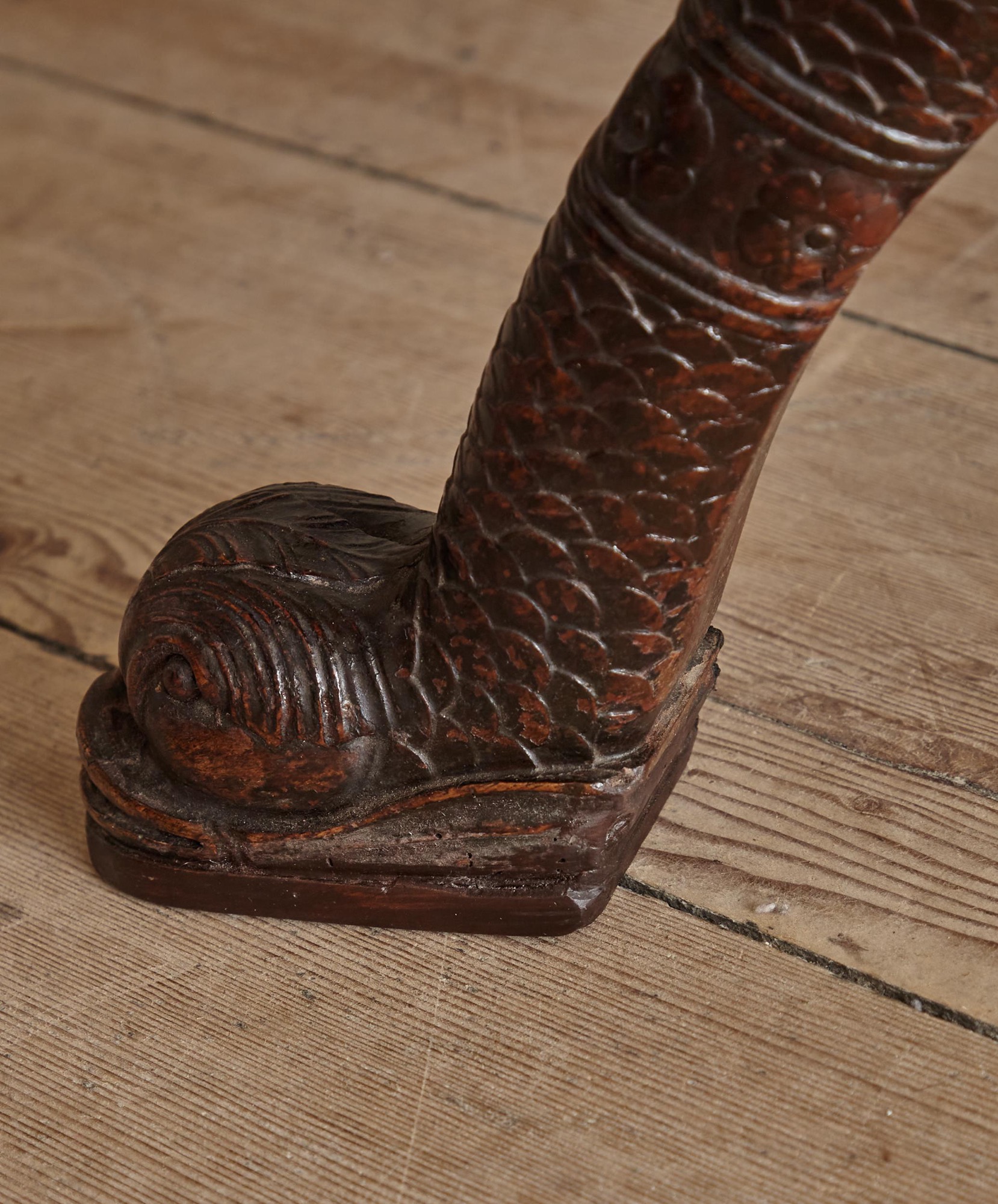
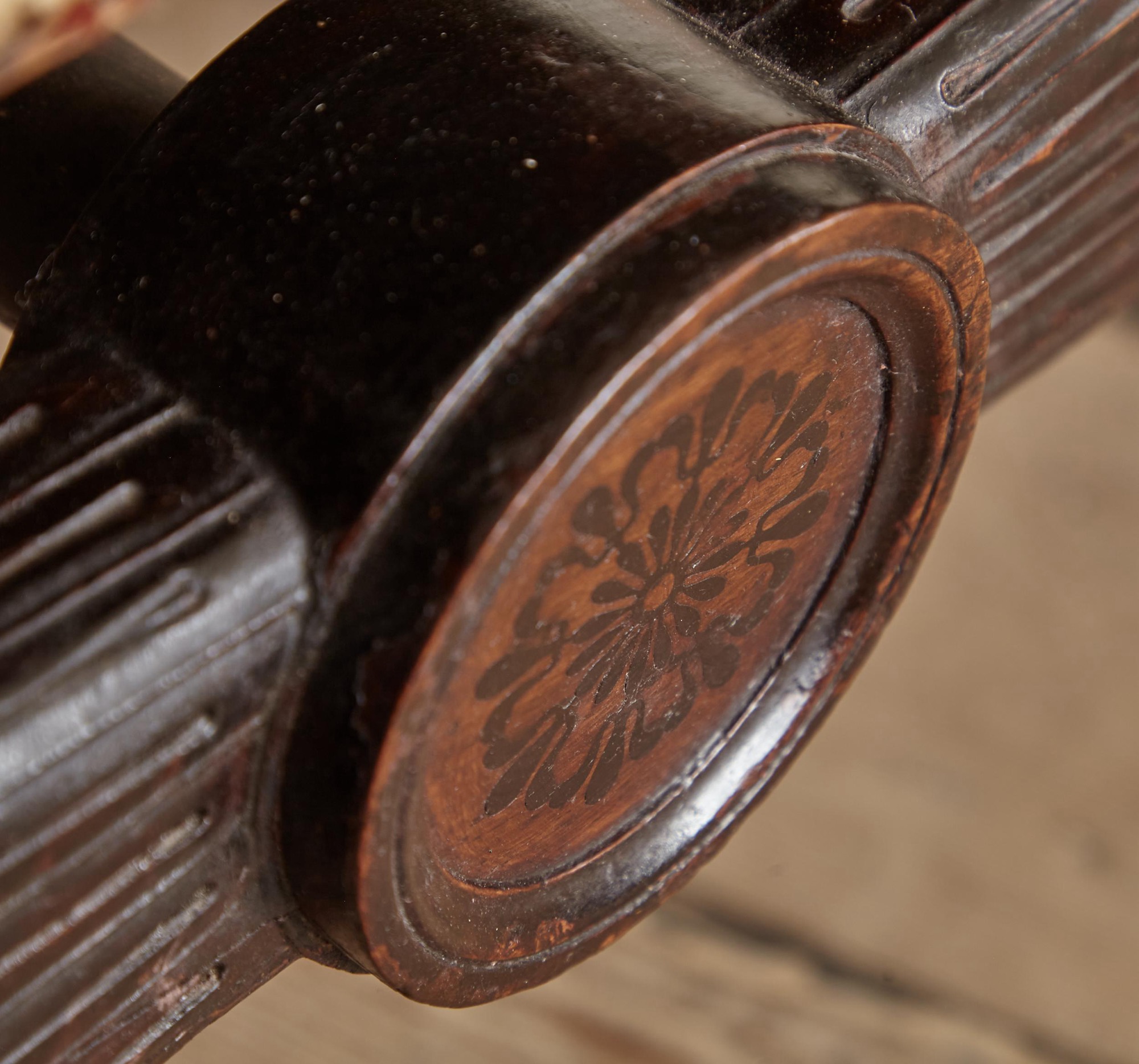
Of x-frame form with scrolling carved arms flanking a central upholstered seat above legs carved with fish scales and terminating in feet carved as dolphin heads. The central boss and roundels in the arm scrolls inlaid with ebony paterae.
England, circa 1815
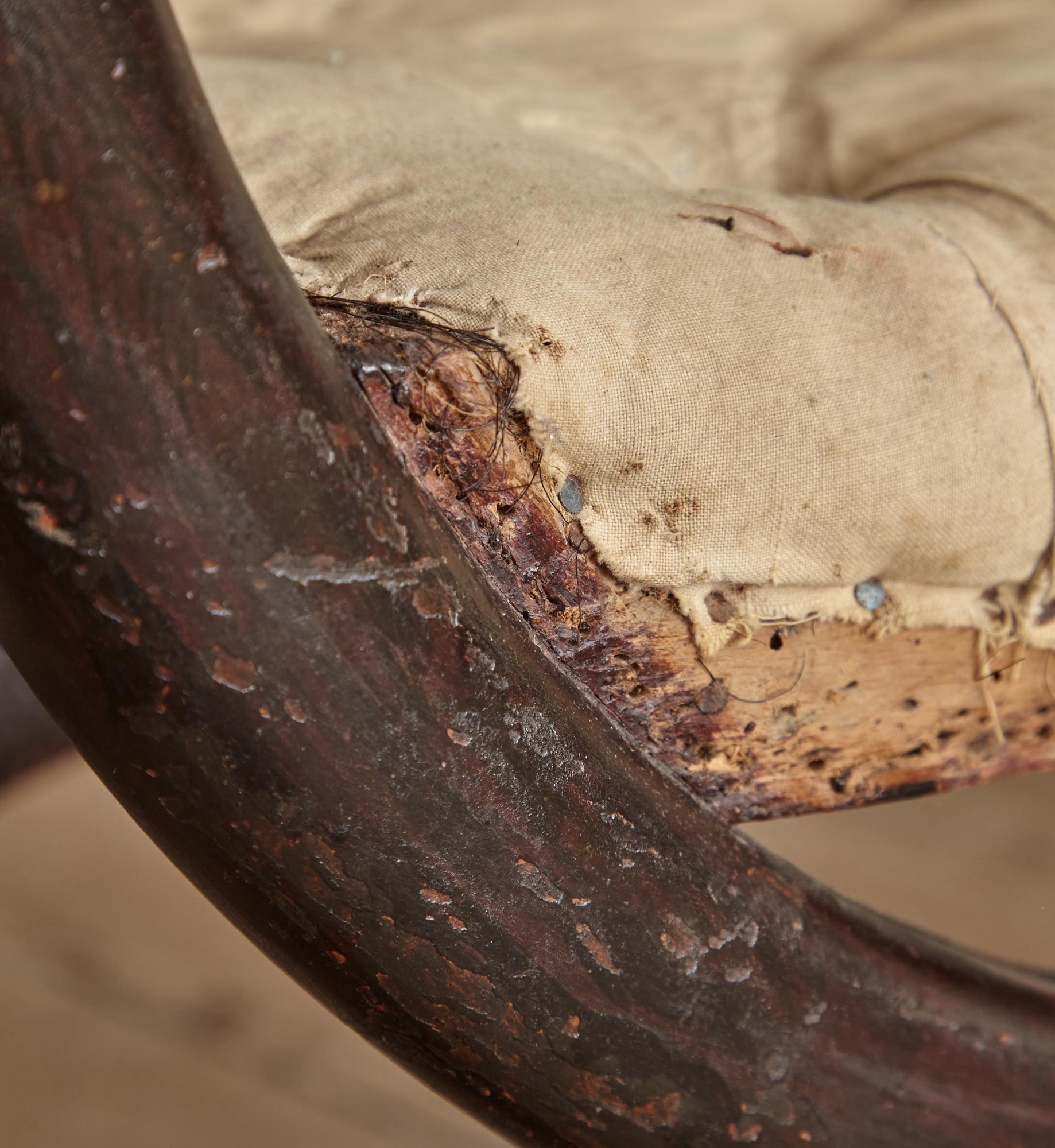
Condition: A roundel missing to one of the the central bosses. Lacking one side of a dolphin face to the inside of one foot. One small corner of one of the feet plinths damaged, now restored. Sensitive cleaning of the roundels revealed the ebony inlaid paterae which had been hidden under layers of dirt. The faux bois paint probably not original to the stool but certainly 19th century. The entire surface sensitively cleaned and small chips to the paintwork touched in. Newly recovered (images taken before recovering), though the horsehair upholstery underneath original.
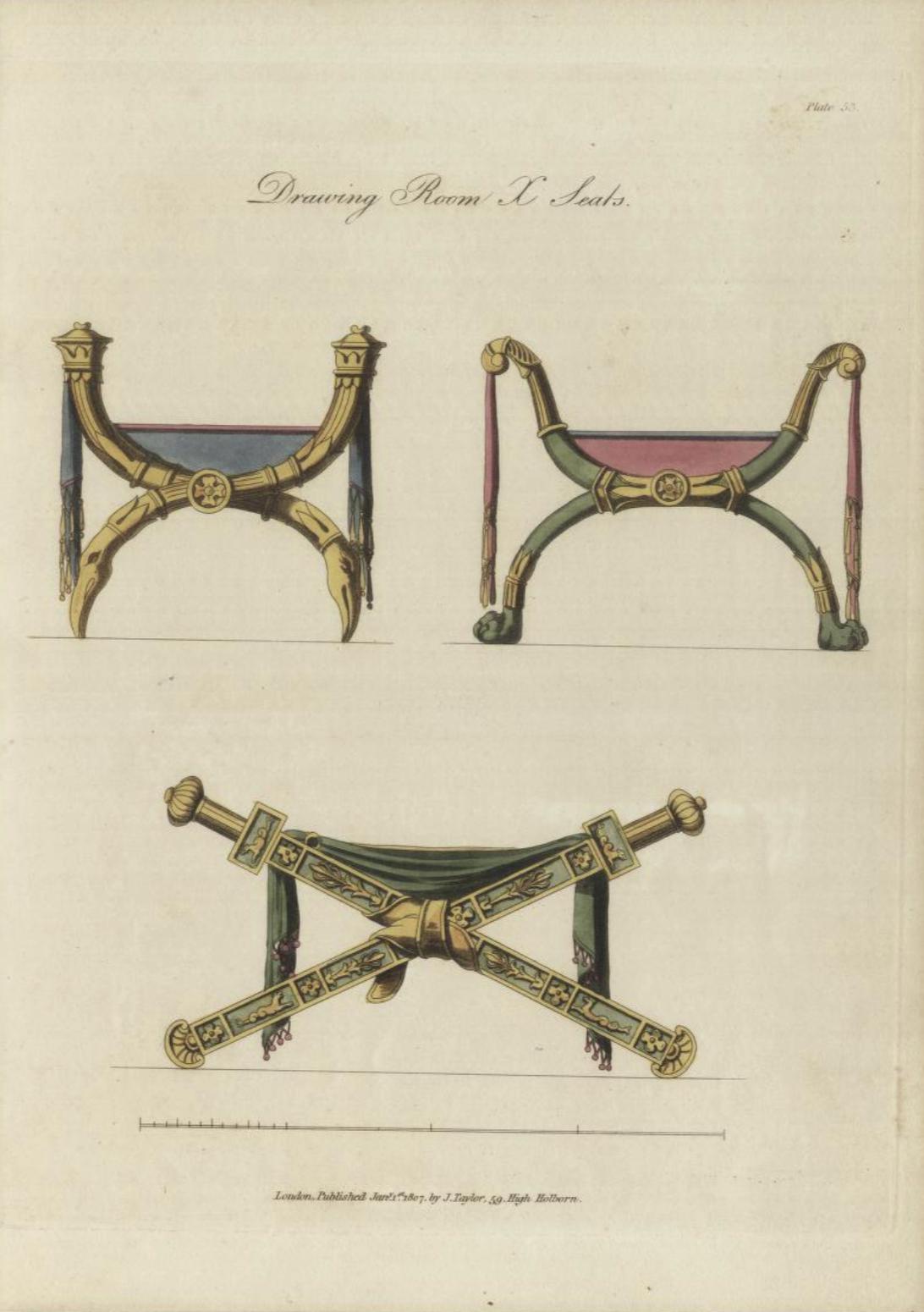
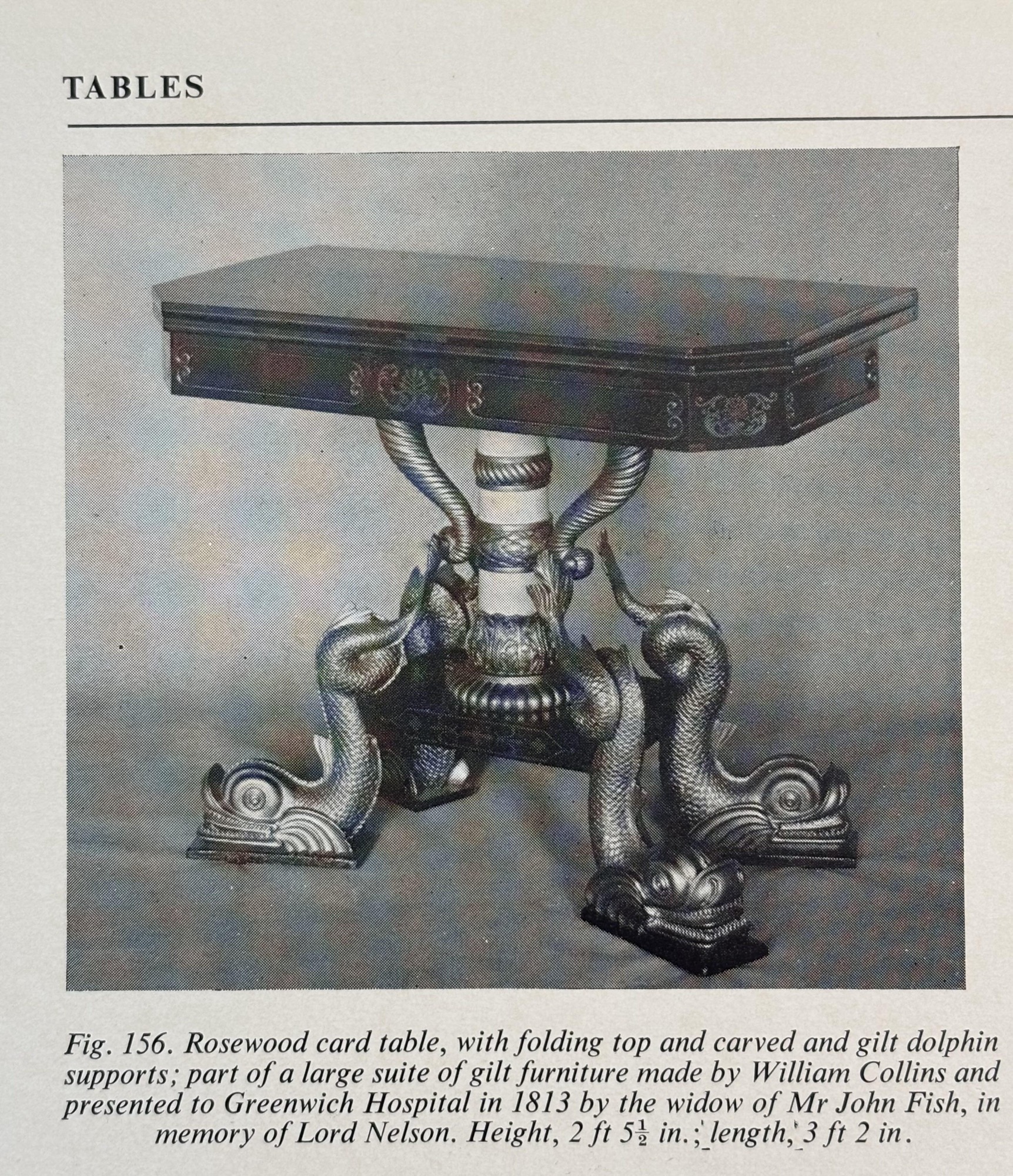
The carved dolphins are reminiscent of a suite of furniture carried out by William Collins, presented to Greenwich Hospital in 1813 by the widow of Mr. John Fish, in memory of Lord Nelson. However, the form and line of the stool itself are perhaps more similar to George Smith's interpretation of the curule stool in his 1808 book, Household Furniture and Interior Decoration. Plate 53, titled 'Drawing Room X Stools', shows a curule stool with a strikingly similar line and scrolling arm. This stool is testament to the influence Smith's book had on early 19th century British furniture design.
The dolphin was a significant motif in Regency furniture. In antiquity the dolphin represented an association with the sea gods and therefore offered protection for seafarers. At a time when England boasted a powerful naval presence and Lord Nelson was revered for his success at sea, it's clear to see why the figure of the dolphin, and what it represented, felt so relevant to designers of the time.
A form of seating originally used by consuls and praetors in ancient Rome, the curule shape signified importance and high standing. The reference to antiquity, coupled with the elite clientele for whom curule seating was originally designed, made this shape a key part of Regency design.
Dimensions:
RELATED ITEMS



, though the horsehair upholstery underneath original.The carved dolphins are reminiscent of a suite of furniture carried out by William Collins, presented to Greenwich Hospital in 1813 by the widow of Mr. John Fish, in memory of Lord Nelson. However, the form and line of the stool itself are perhaps more similar to George Smith's interpretation of the curule stool in his 1808 book, Household Furniture and Interior Decoration. Plate 53, titled 'Drawing Room X Stools', shows a curule stool with a strikingly similar line and scrolling arm. This stool is testament to the influence Smith's book had on early 19th century British furniture design.The dolphin was a significant motif in Regency furniture. In antiquity the dolphin represented an association with the sea gods and therefore offered protection for seafarers. At a time when England boasted a powerful naval presence and Lord Nelson was revered for his success at sea, it's clear to see why the figure of the dolphin, and what it represented, felt so relevant to designers of the time.A form of seating originally used by consuls and praetors in ancient Rome, the curule shape signified importance and high standing. The reference to antiquity, coupled with the elite clientele for whom curule seating was originally designed, made this shape a key part of Regency design.)