An exceptional ebony veneered and silk stumpwork Antwerp cabinet on stand
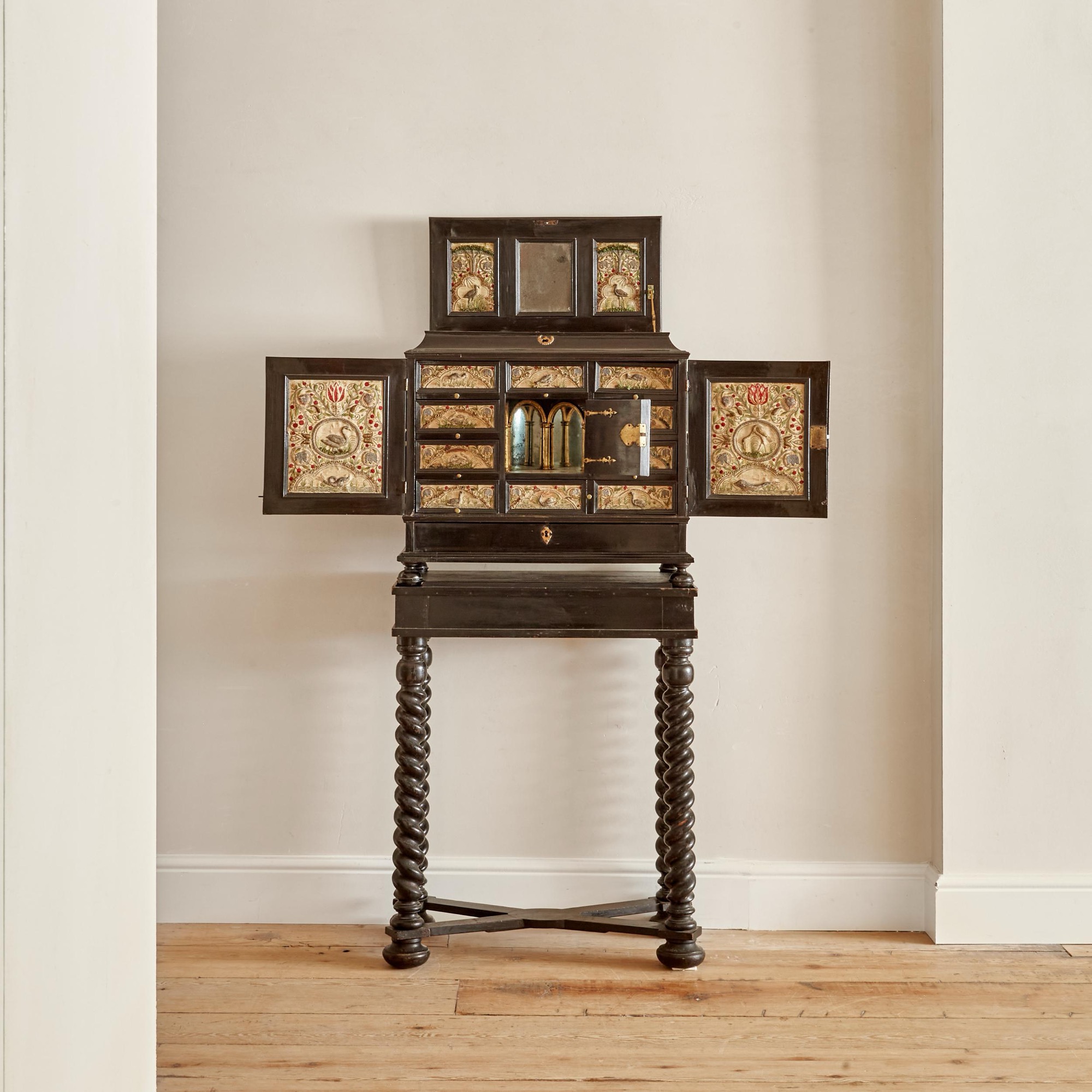
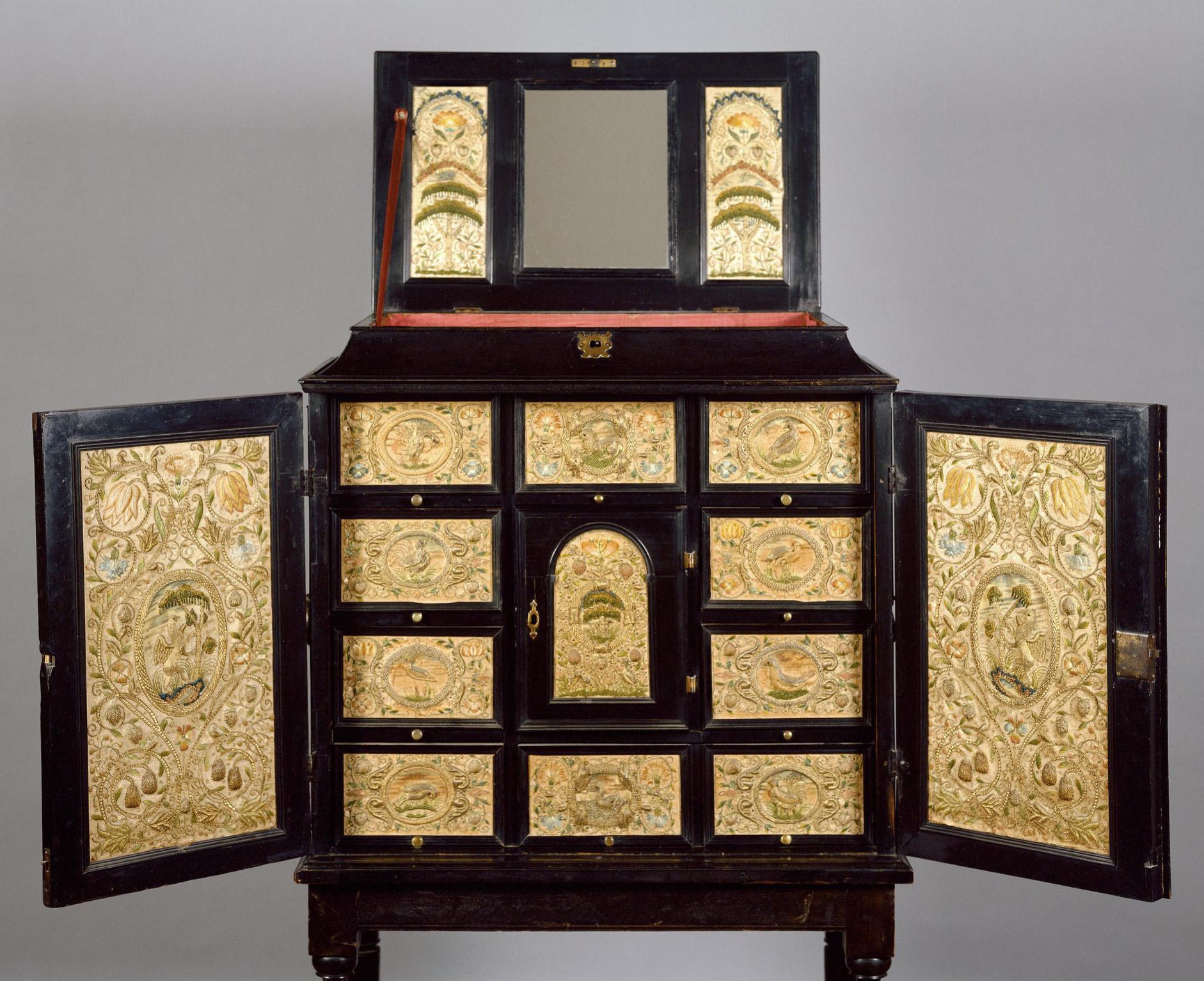
An exceptional ebony veneered and silk stumpwork Antwerp cabinet on stand
5831
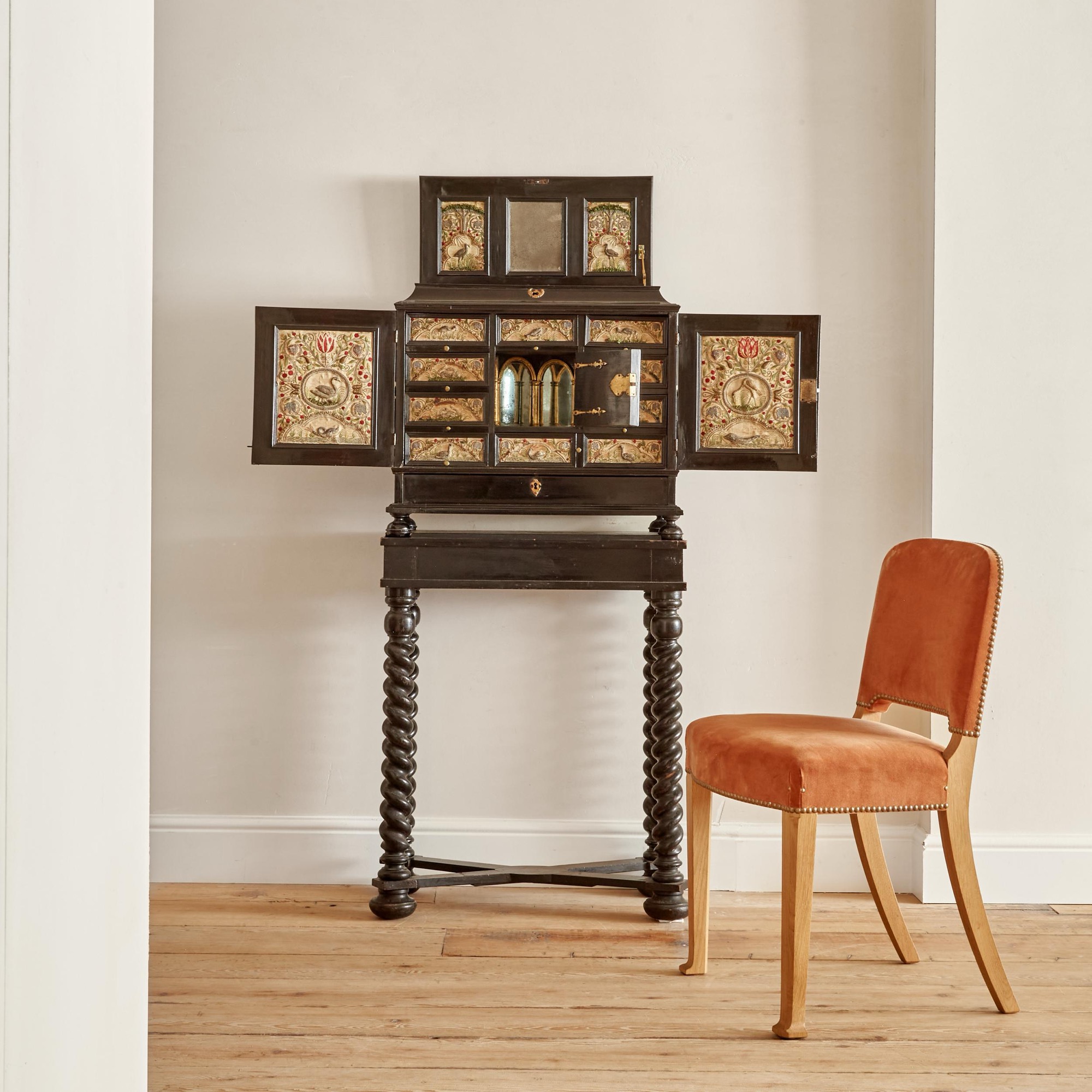
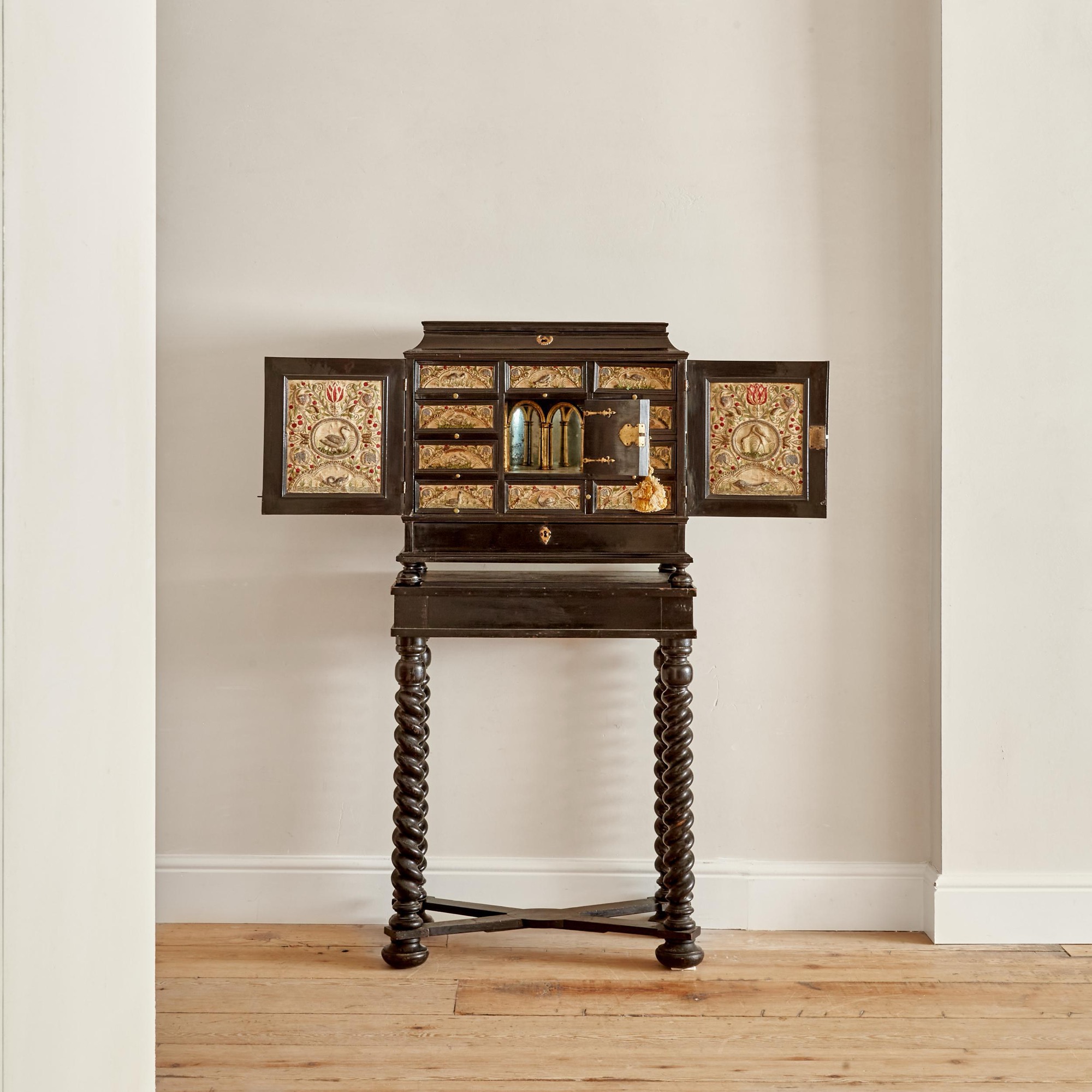
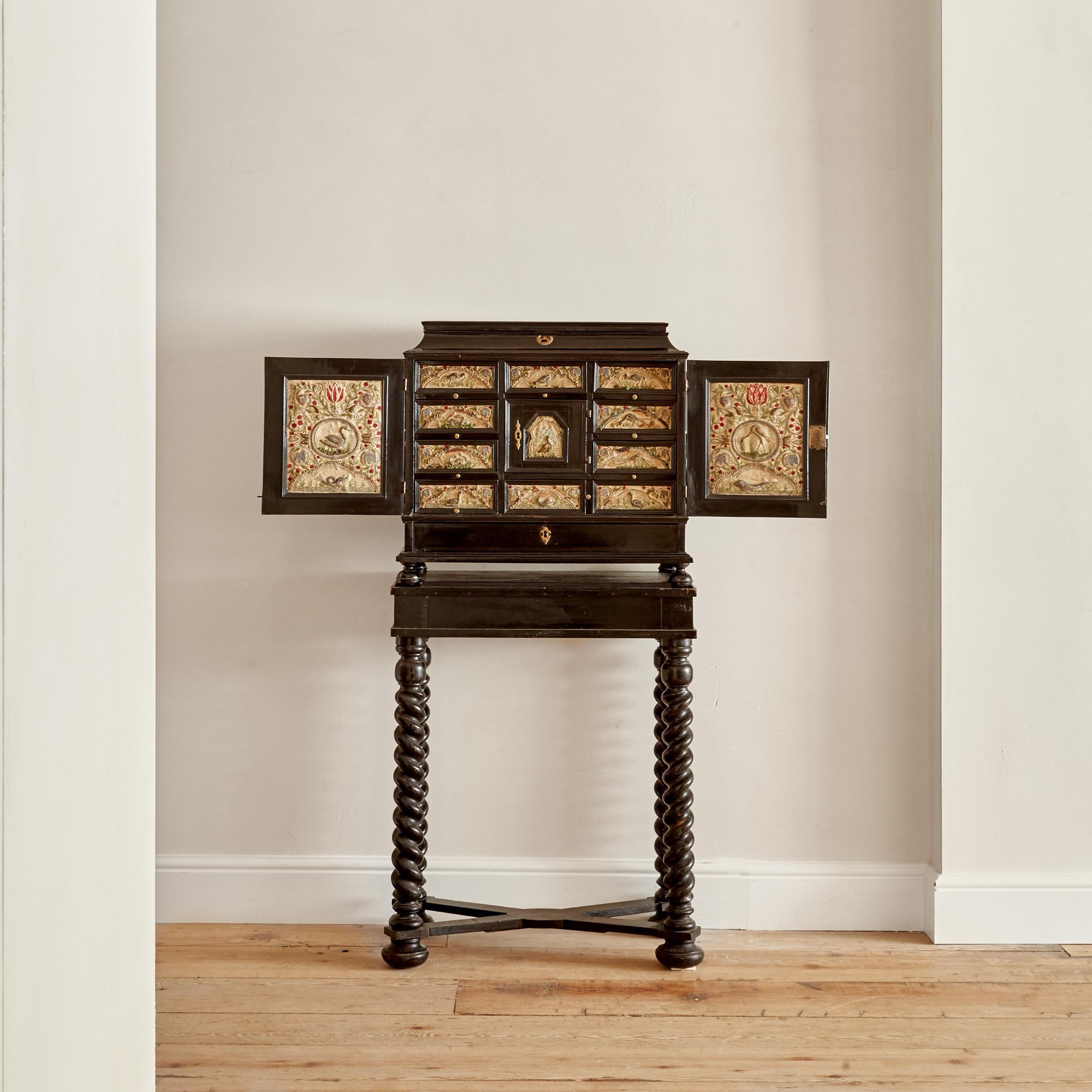
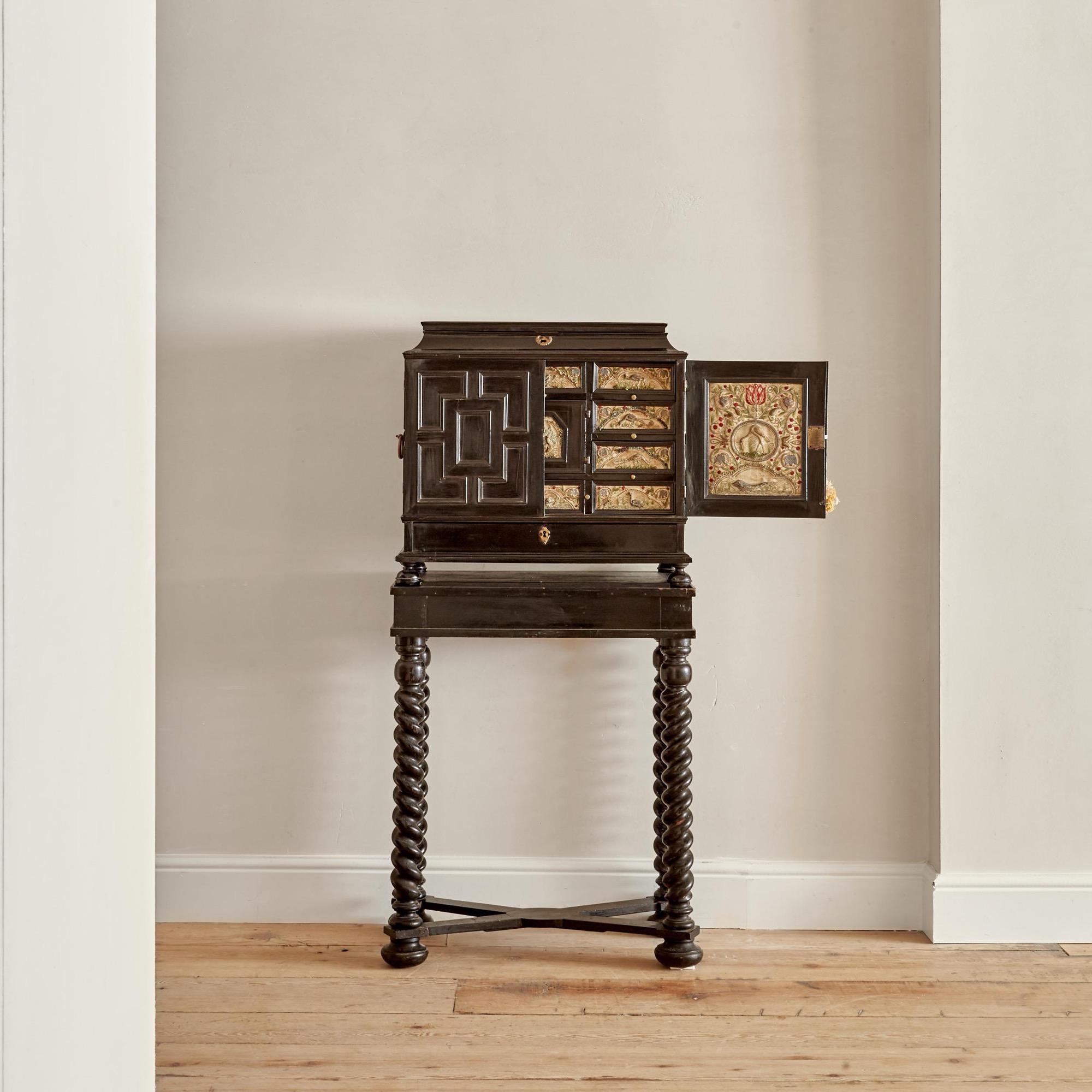
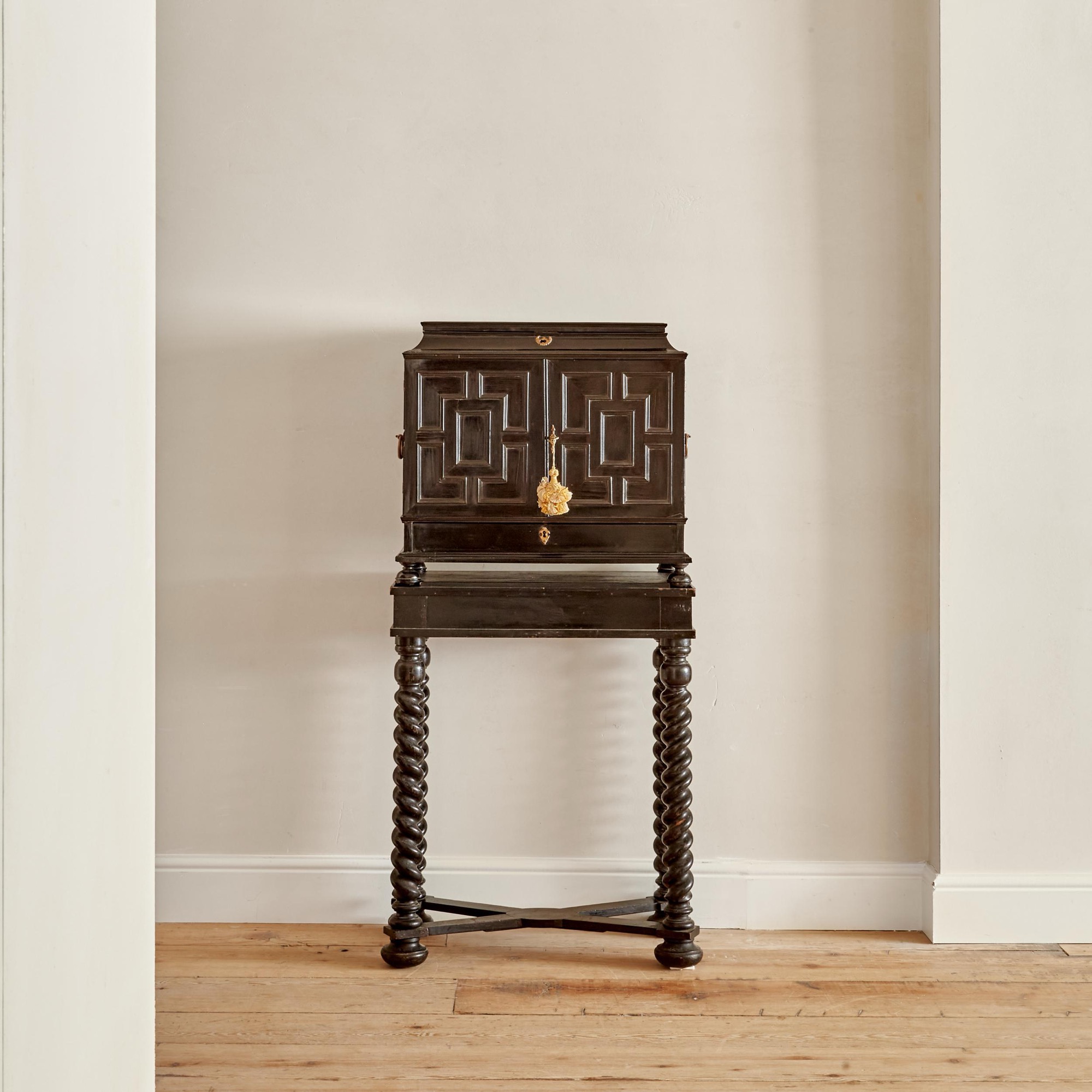
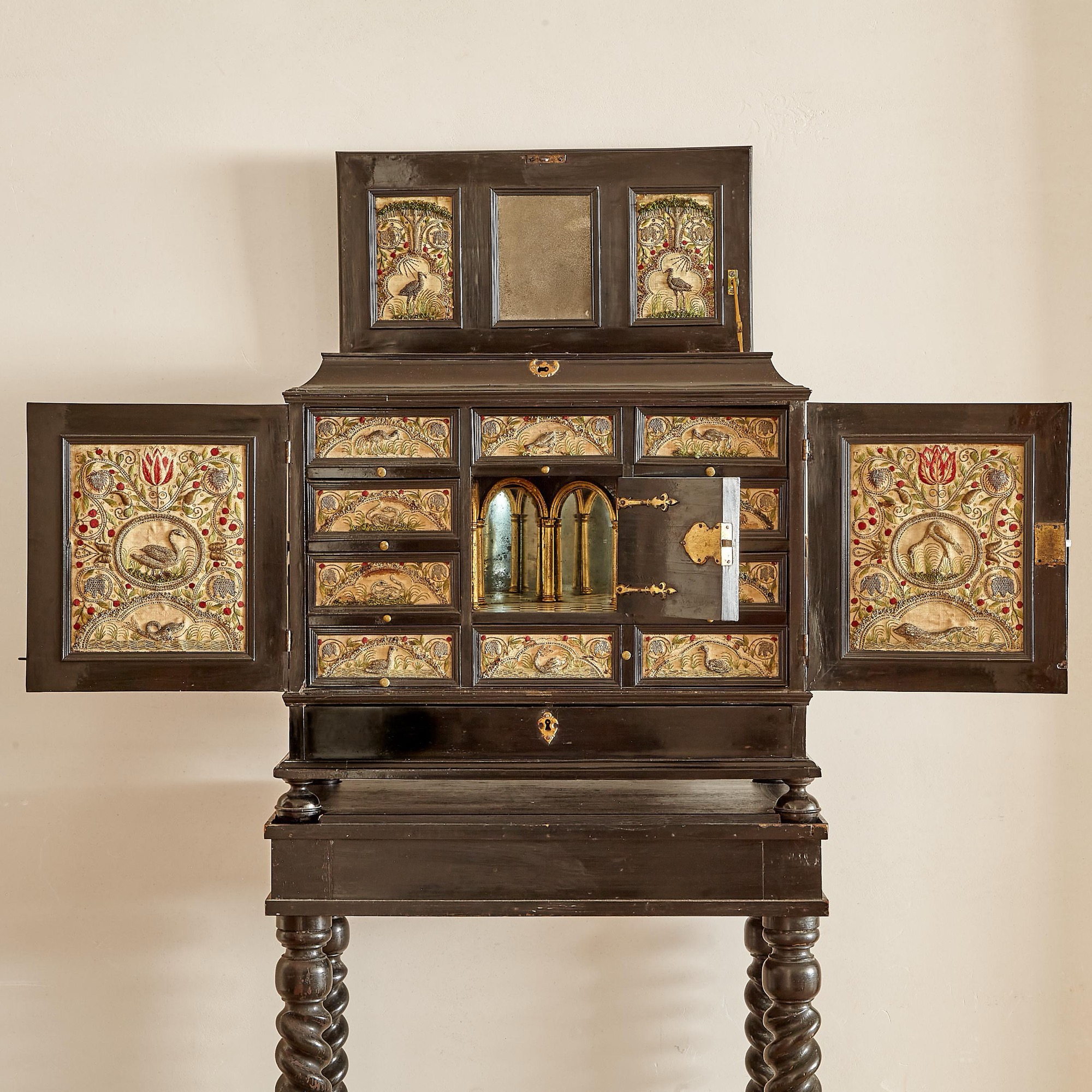
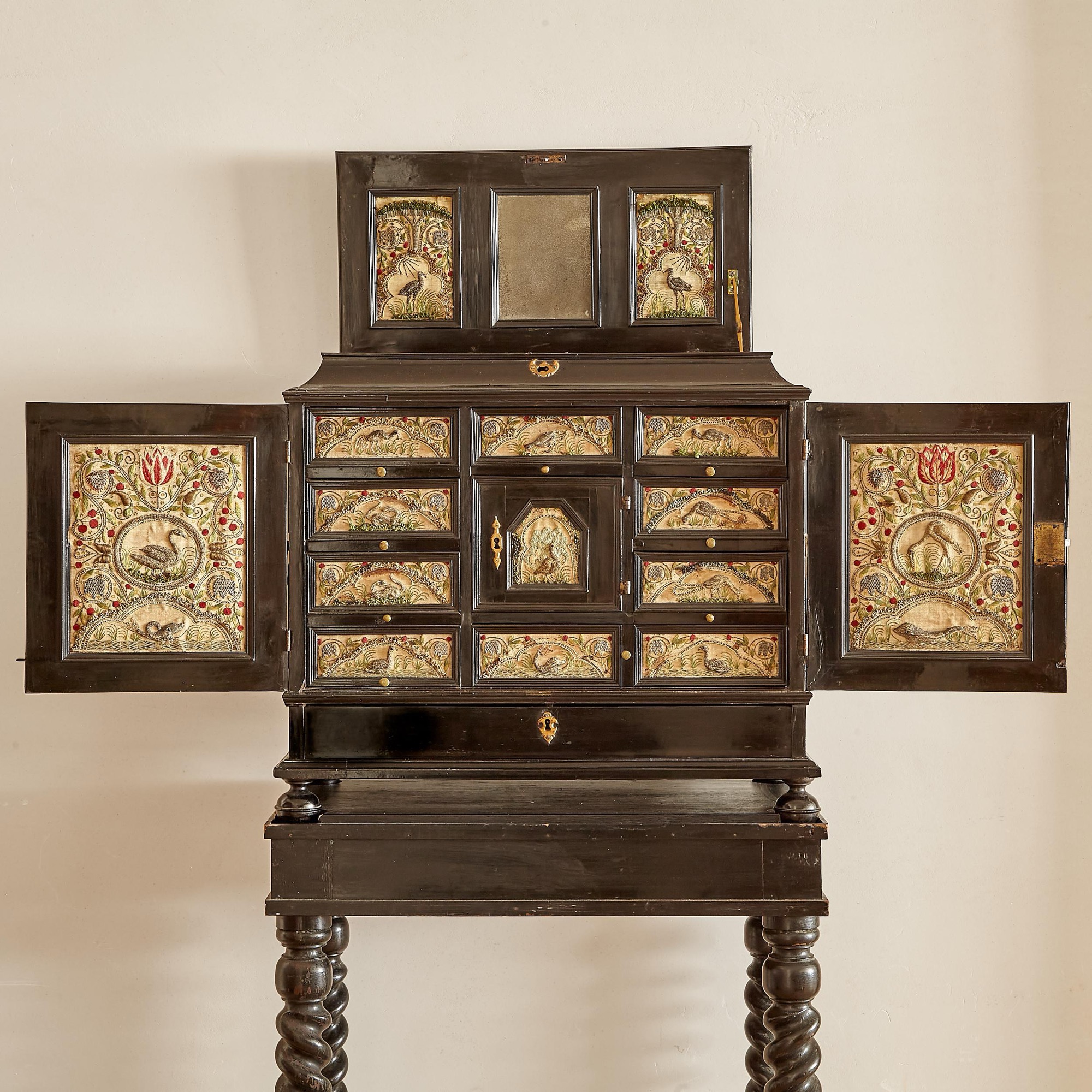
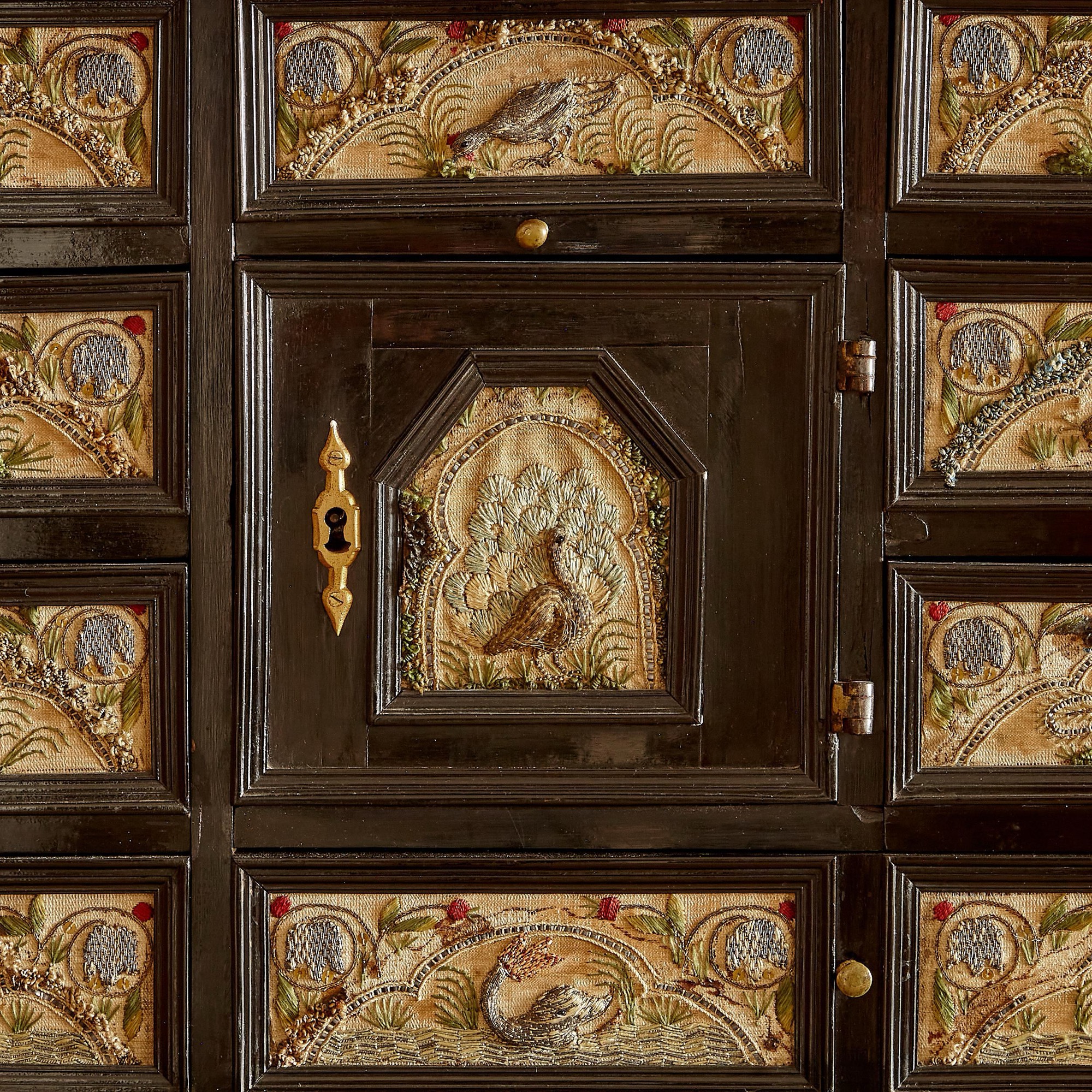
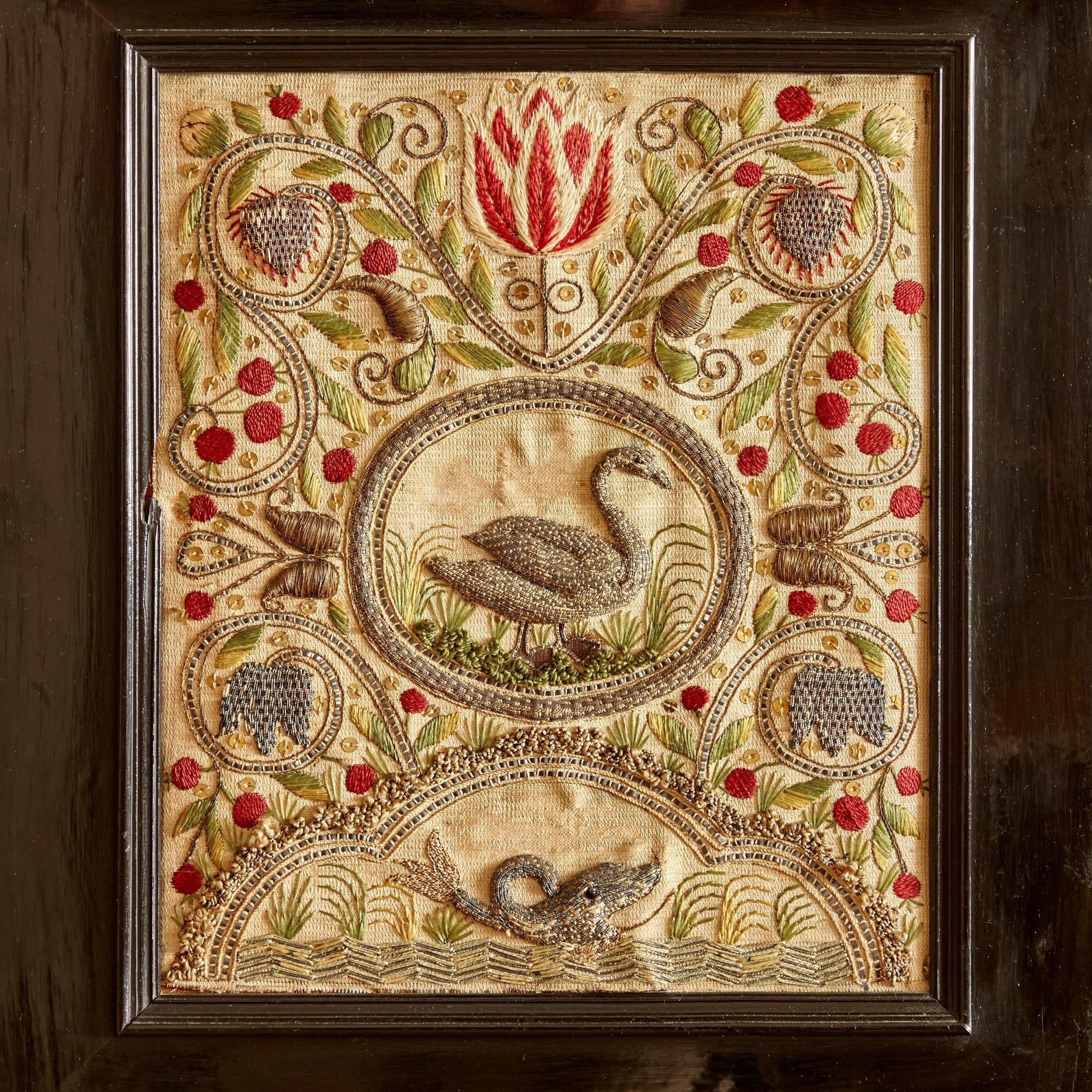
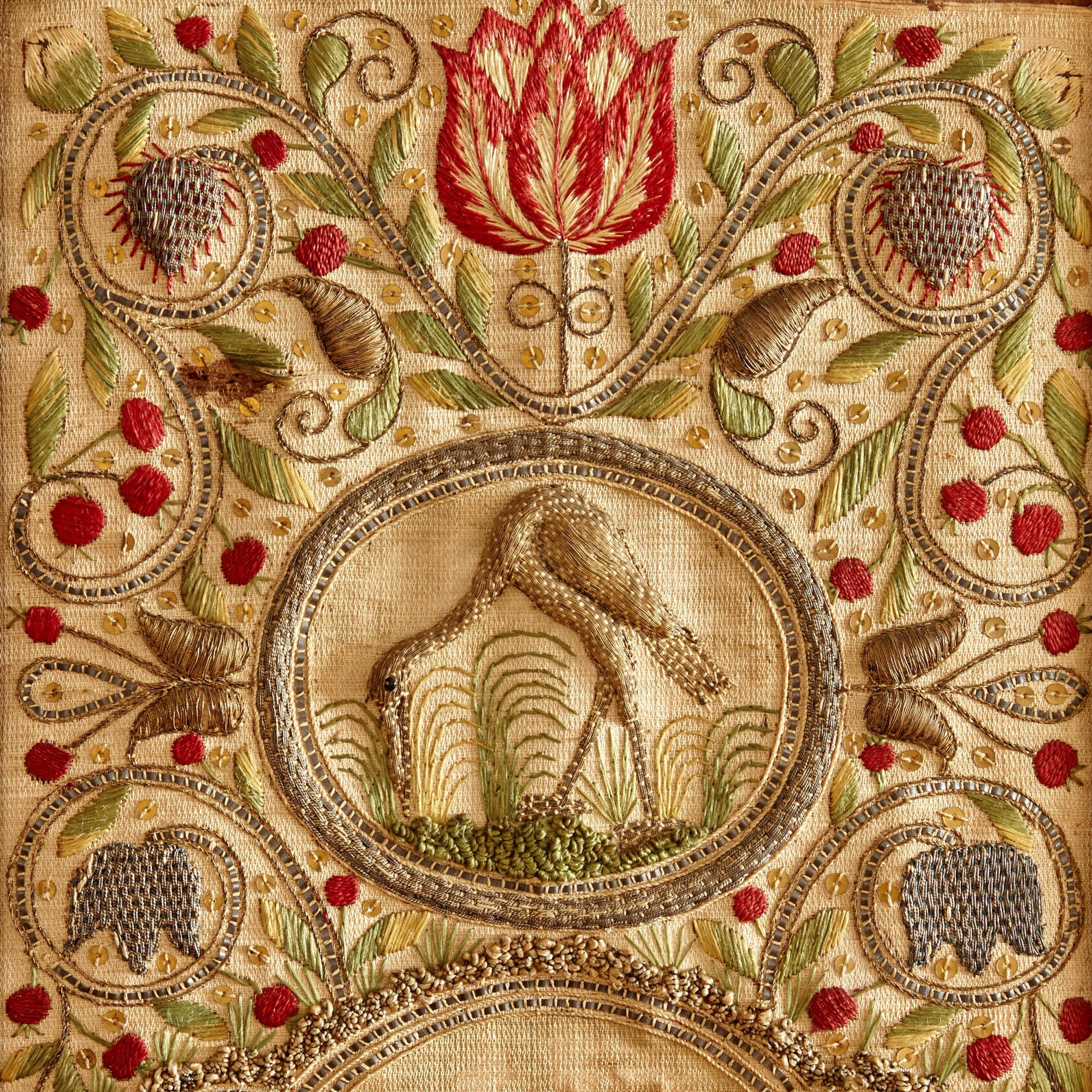
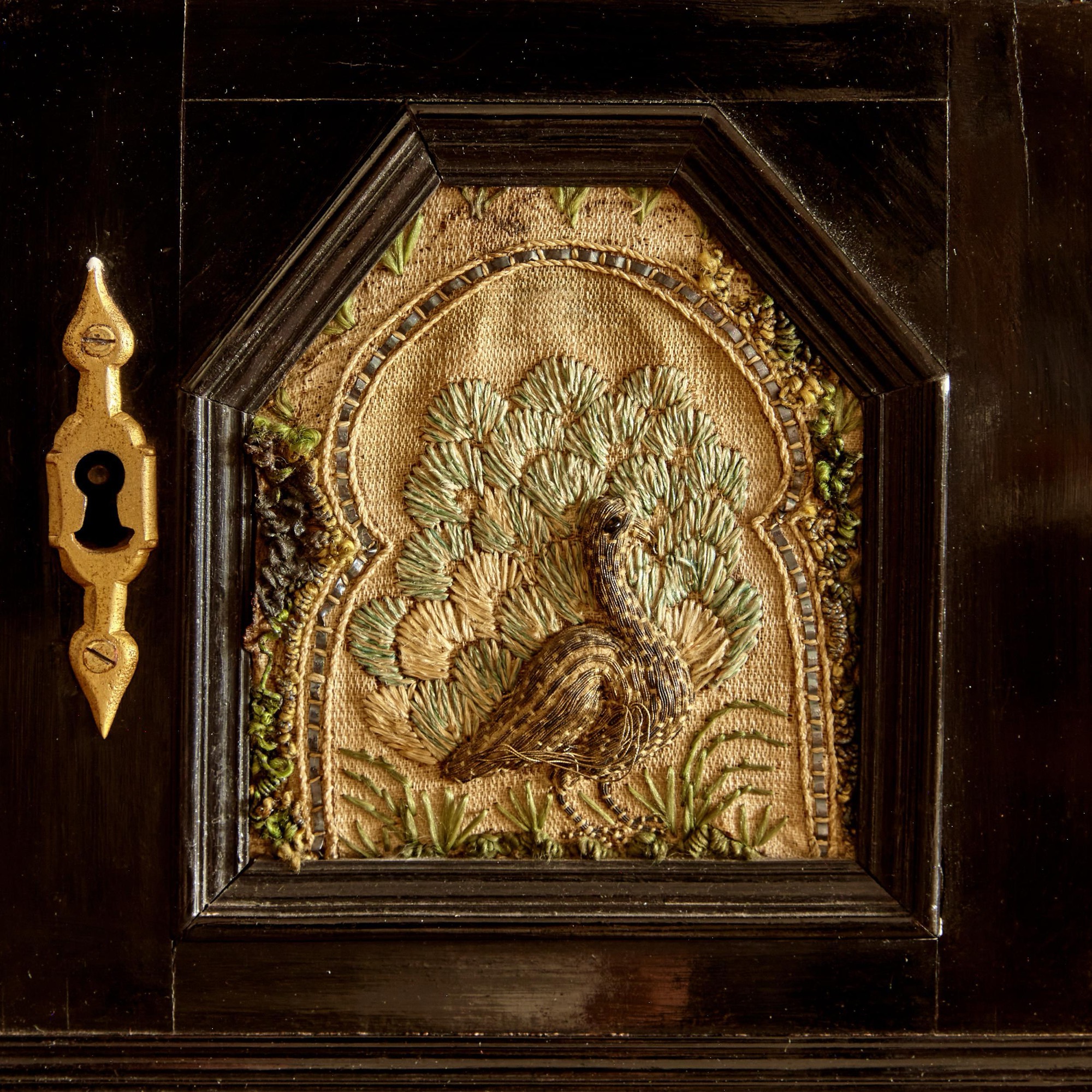
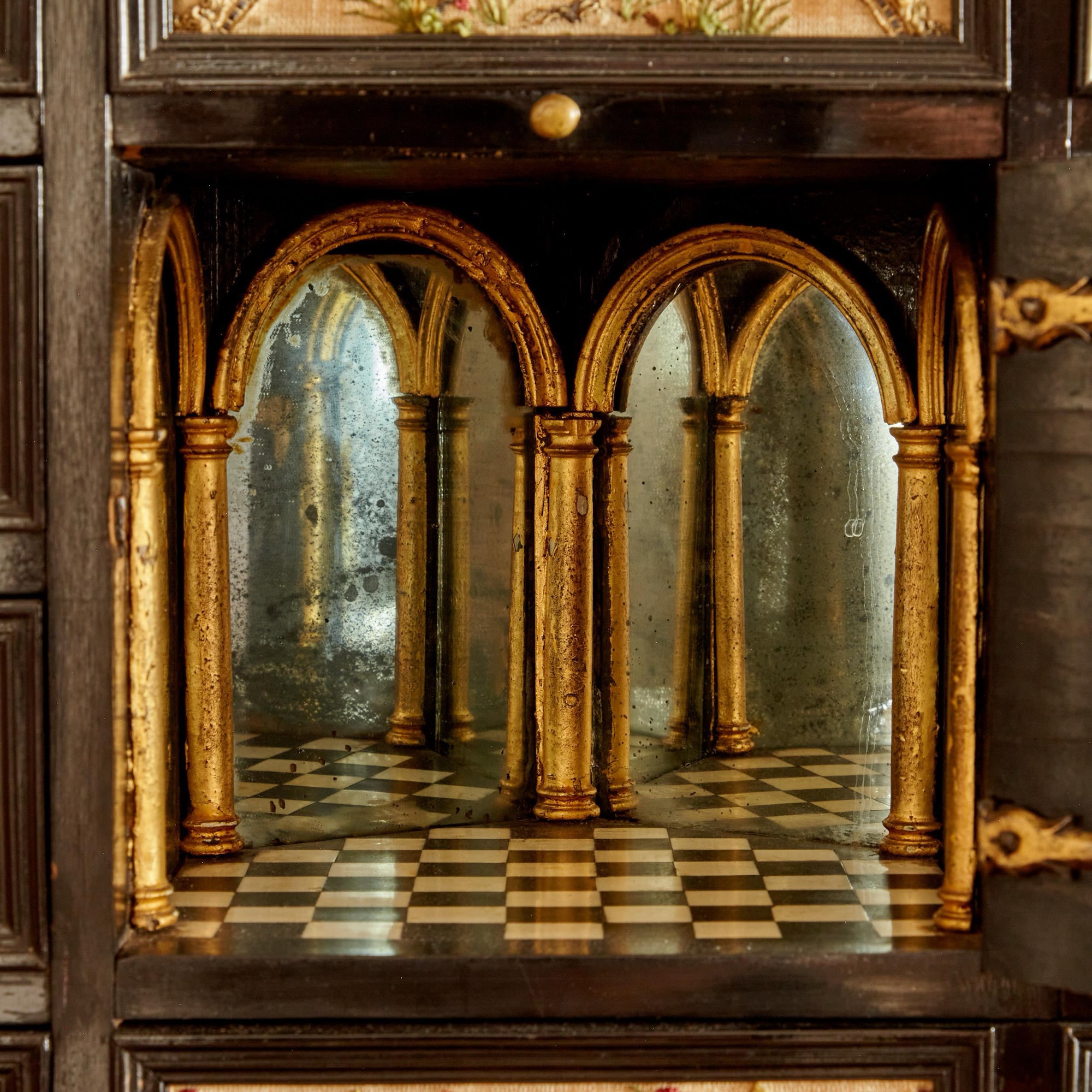
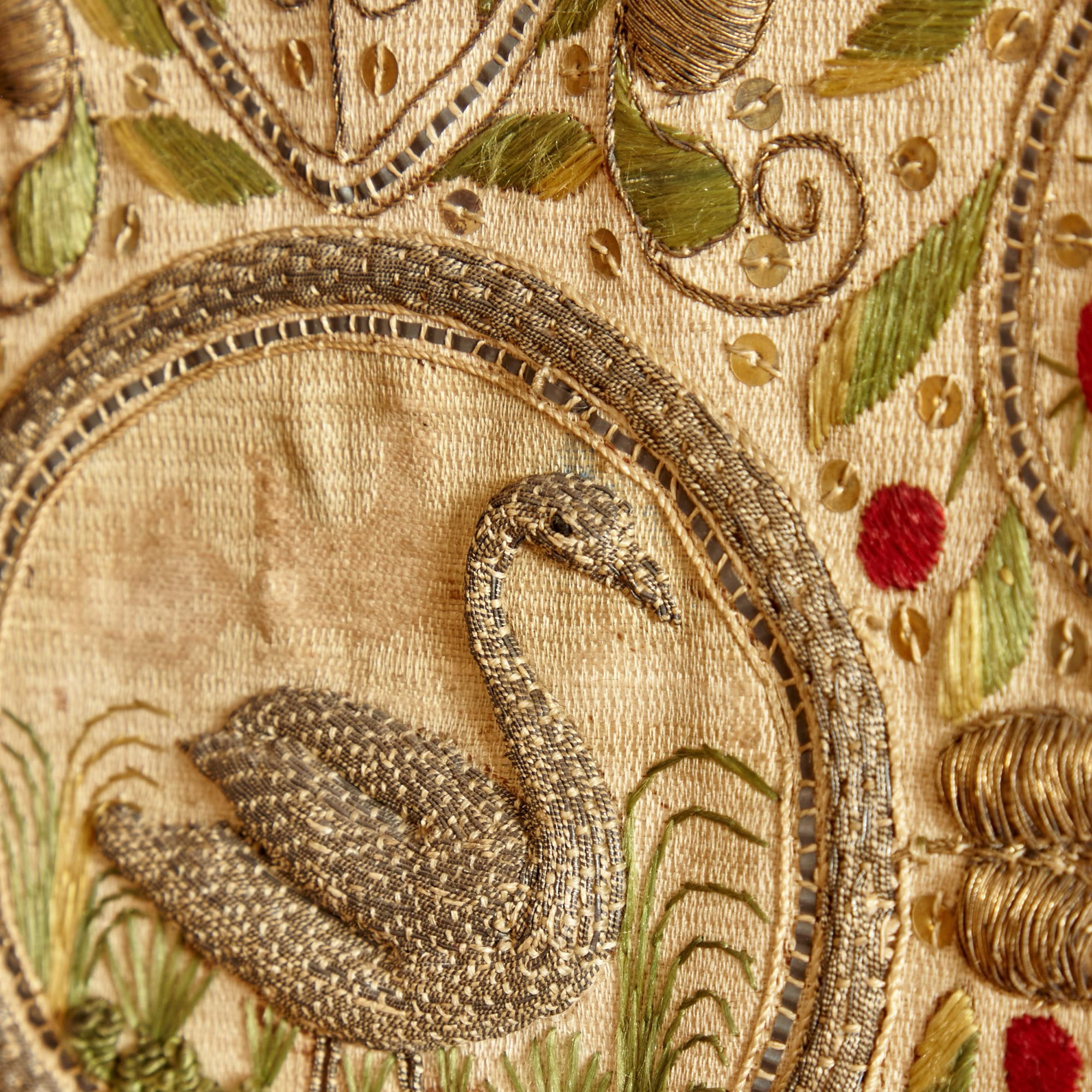
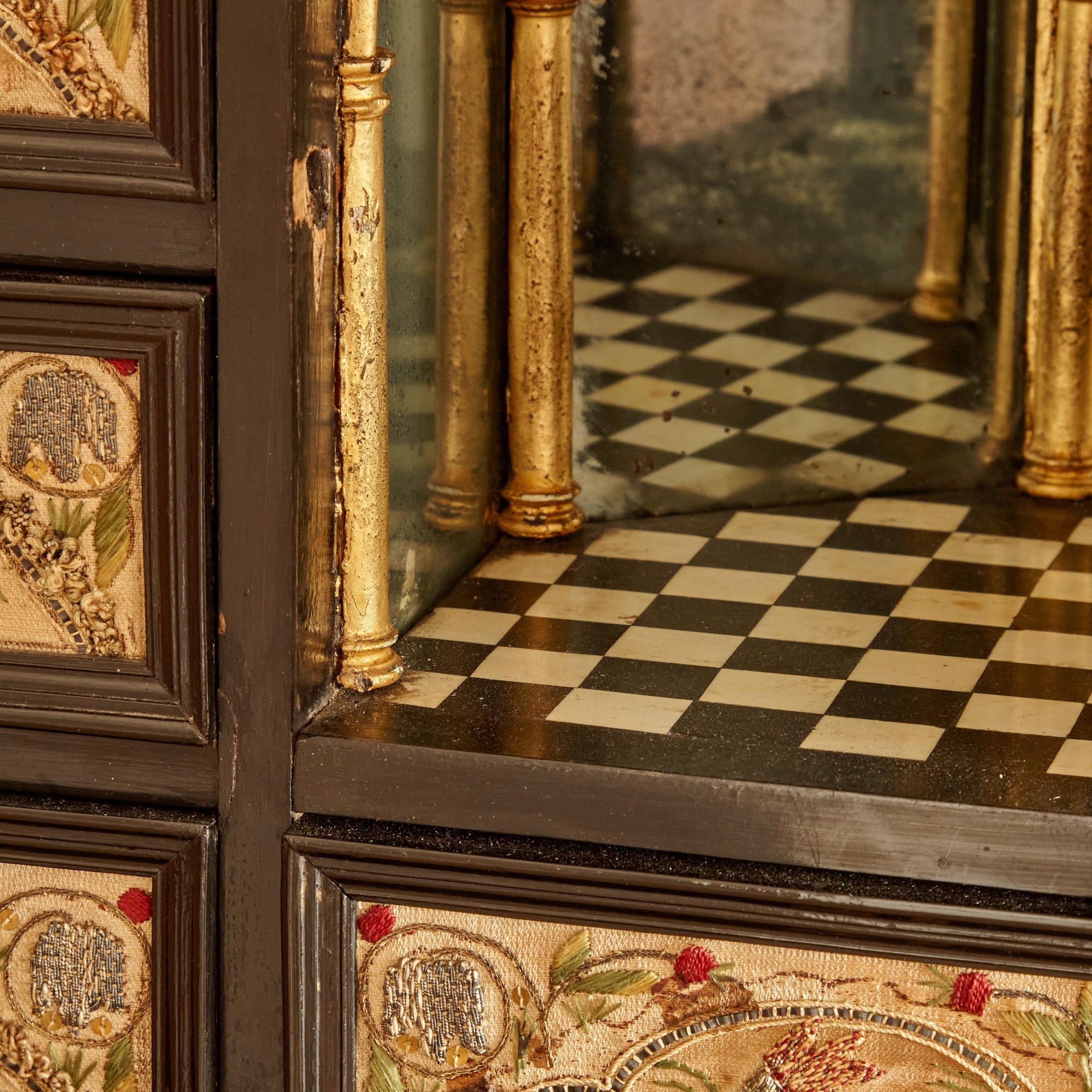
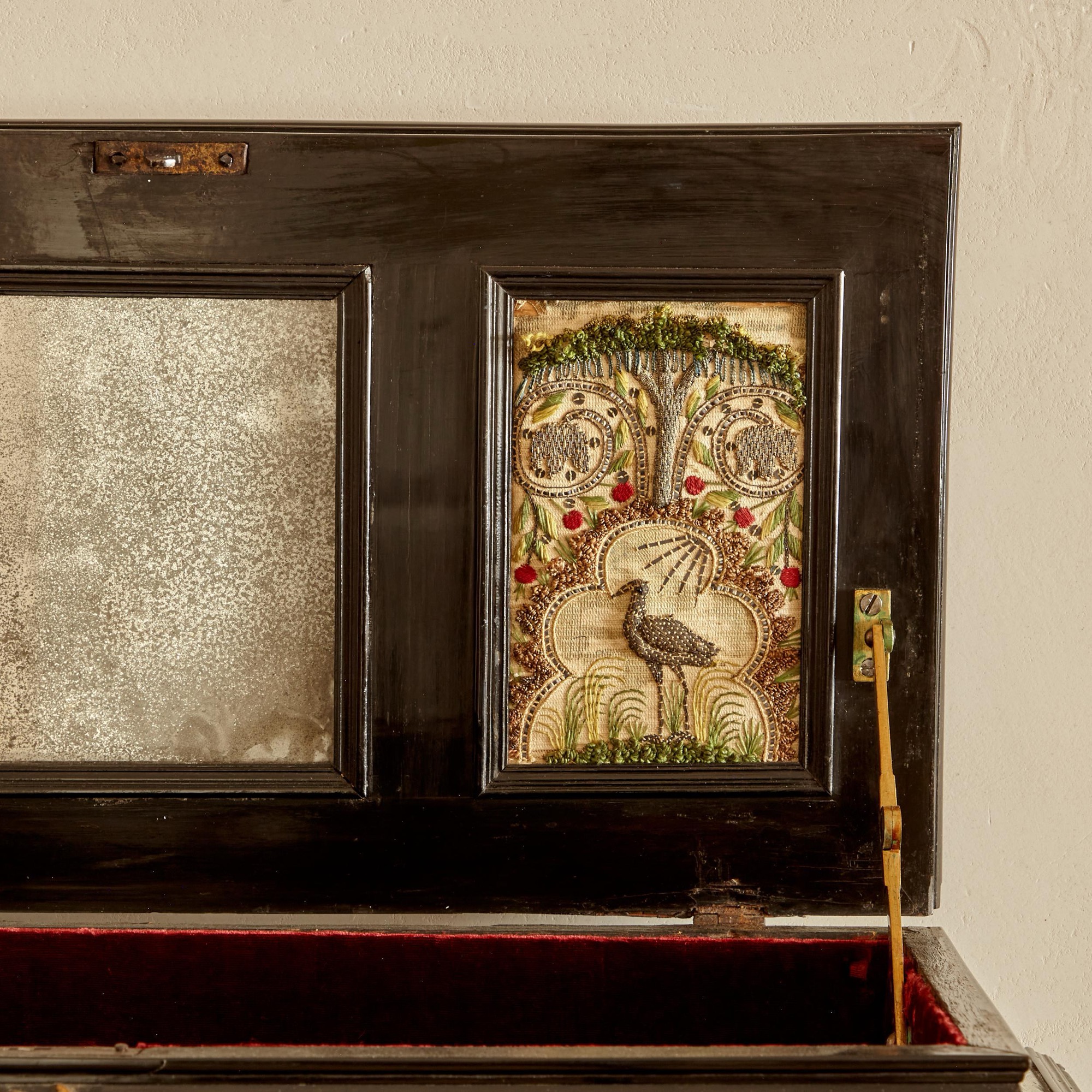
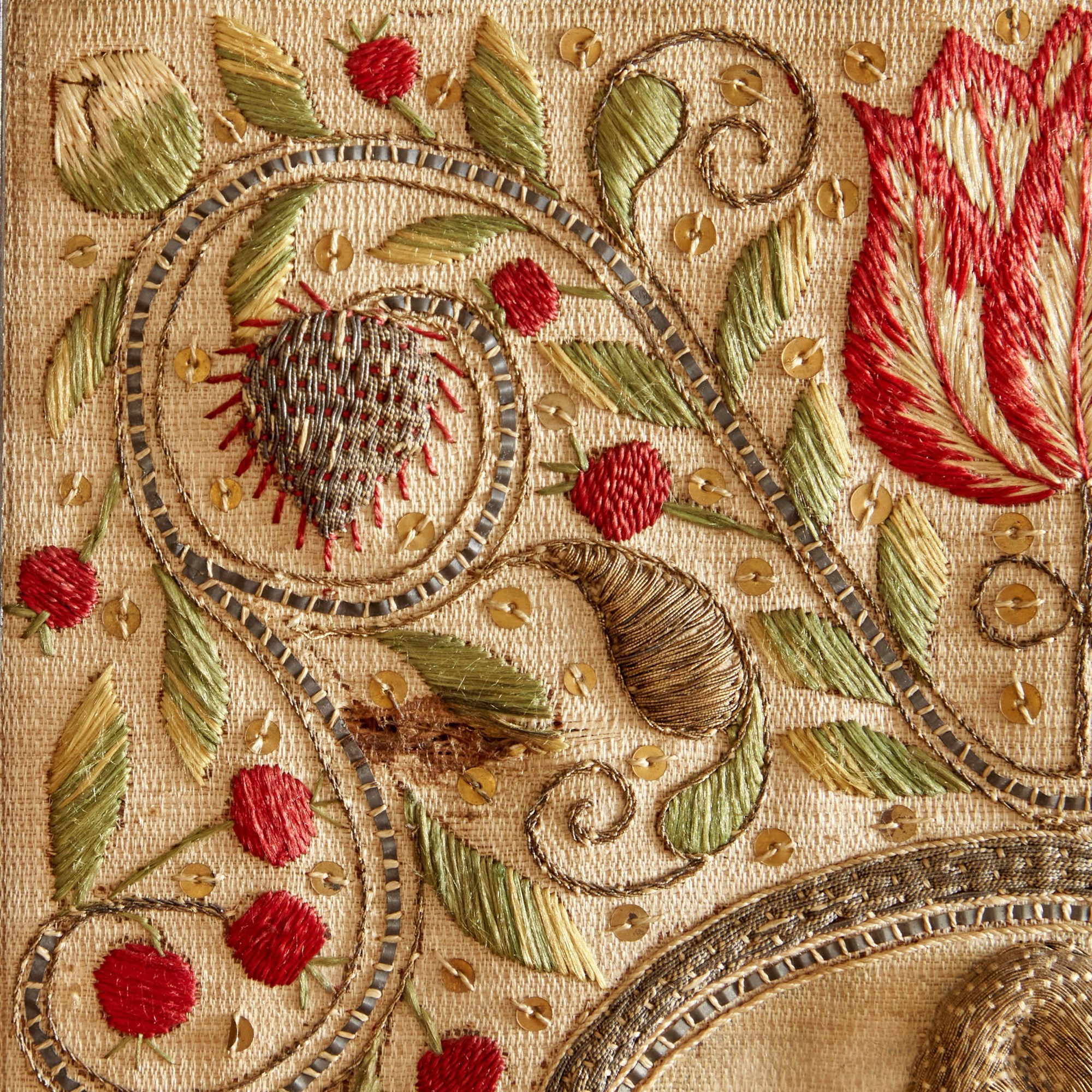
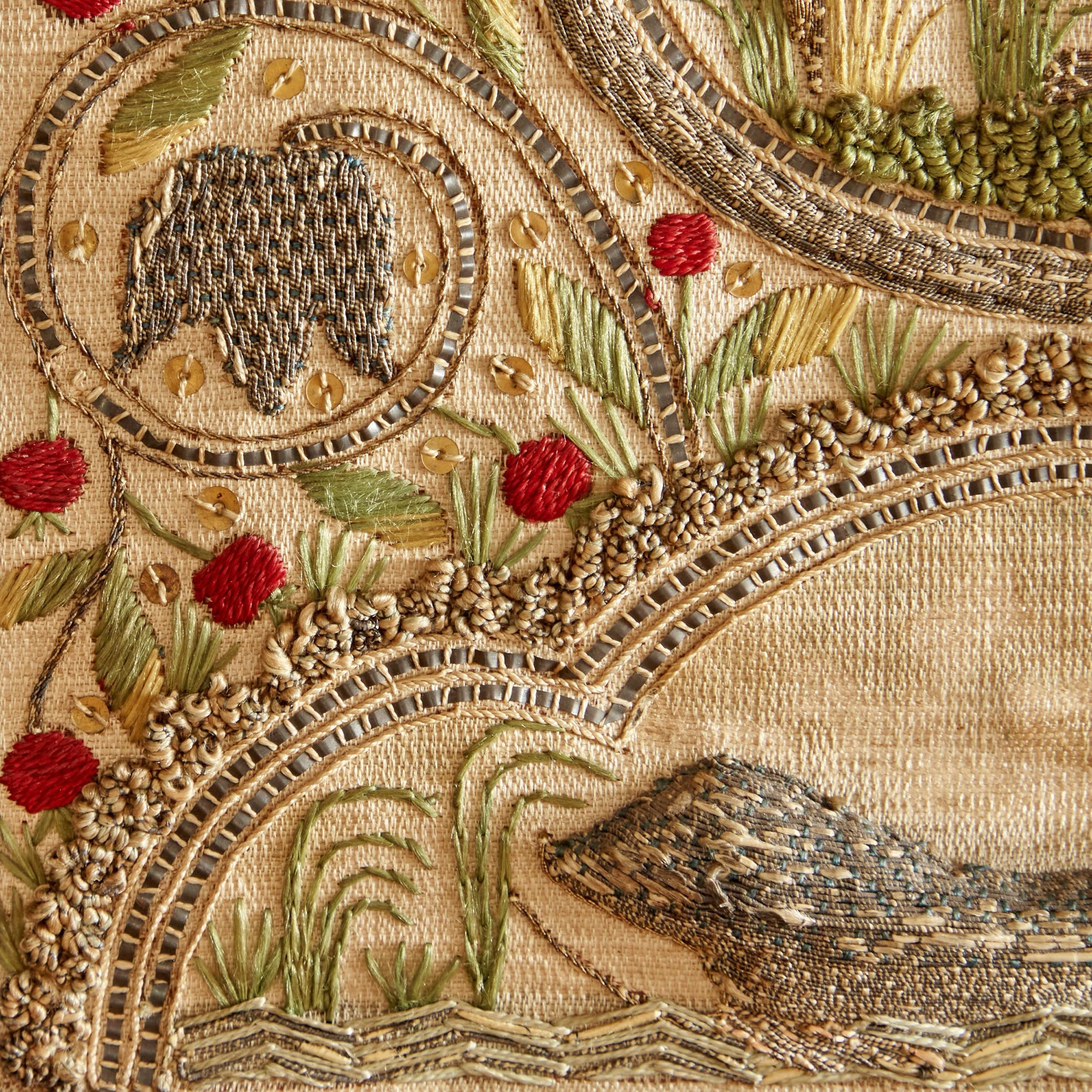
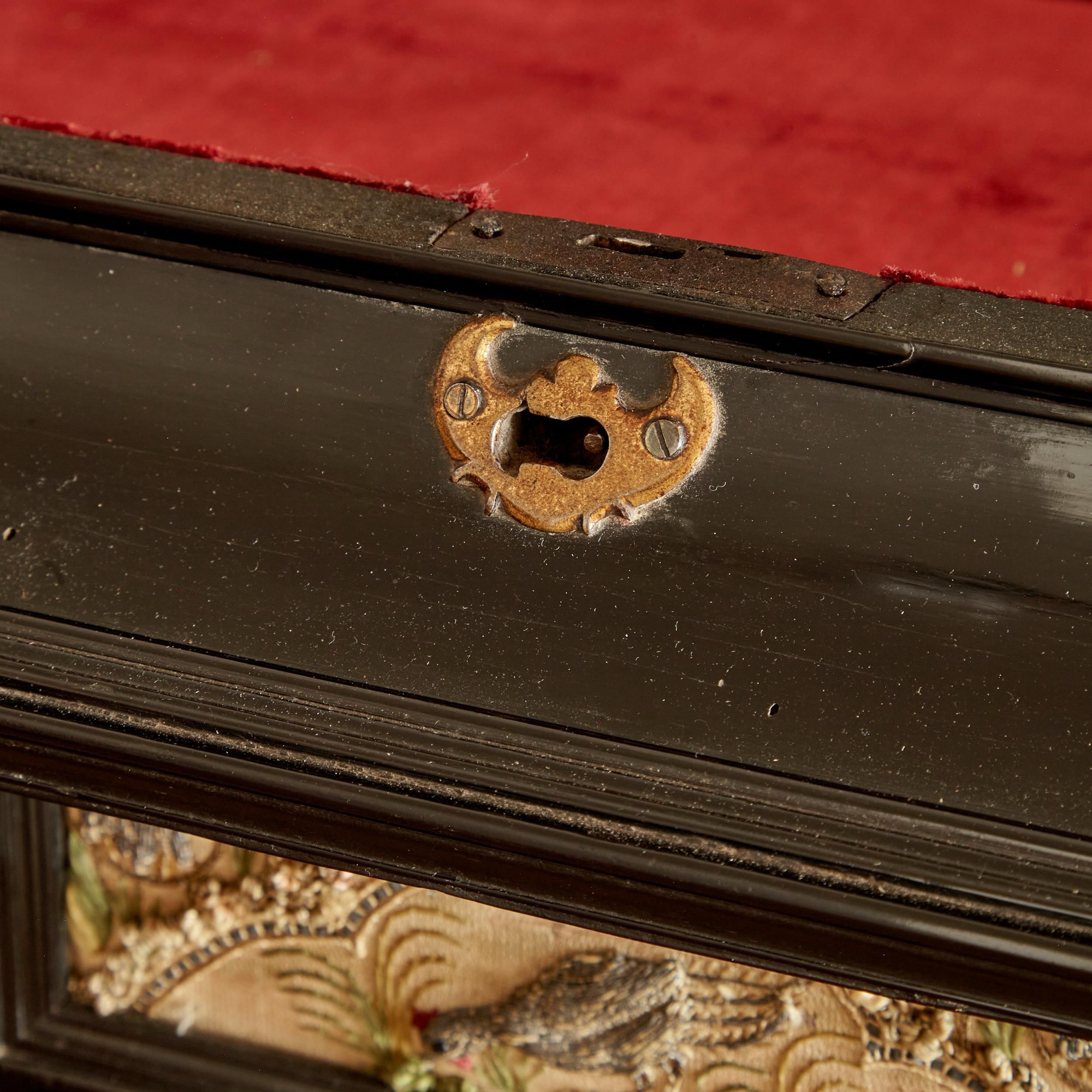
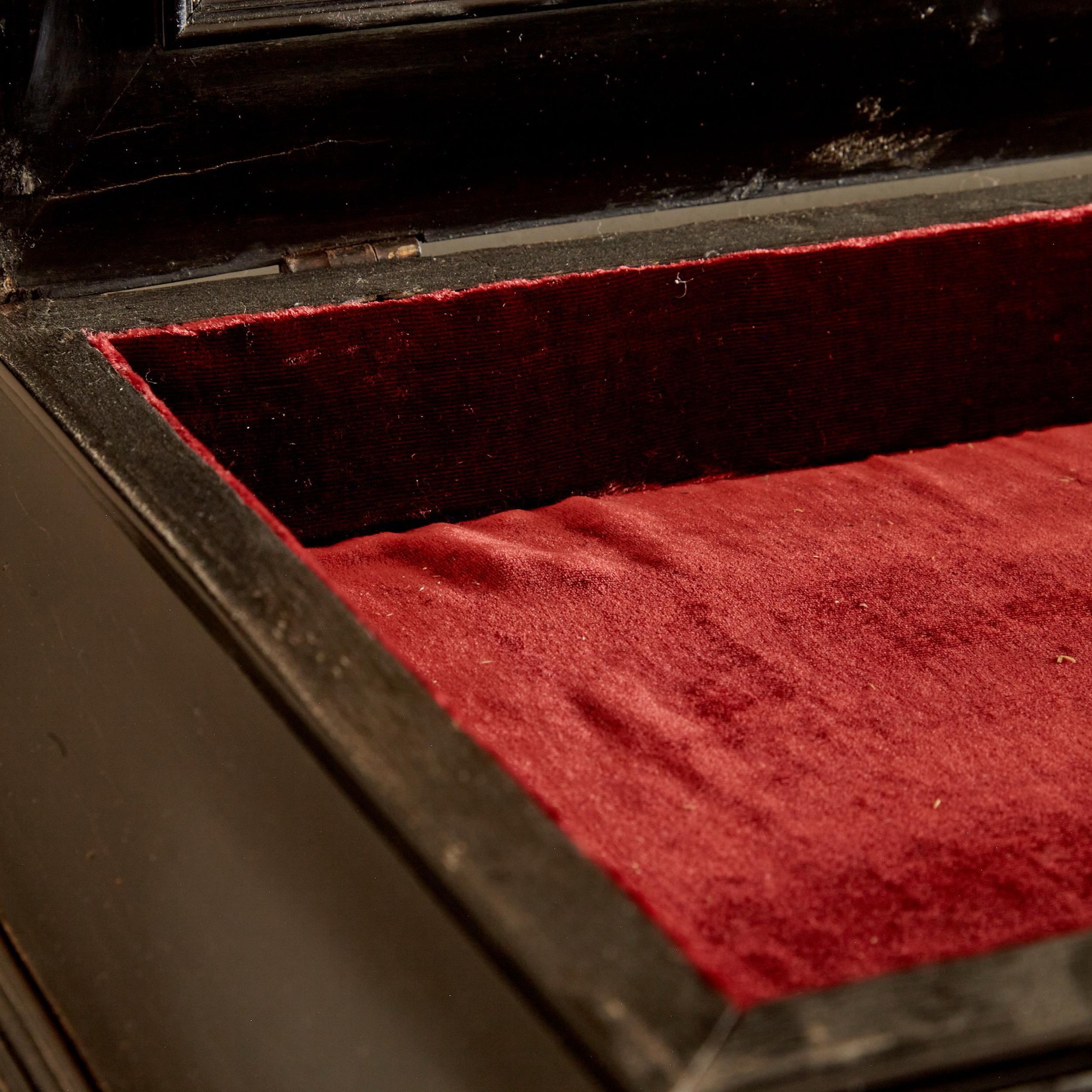
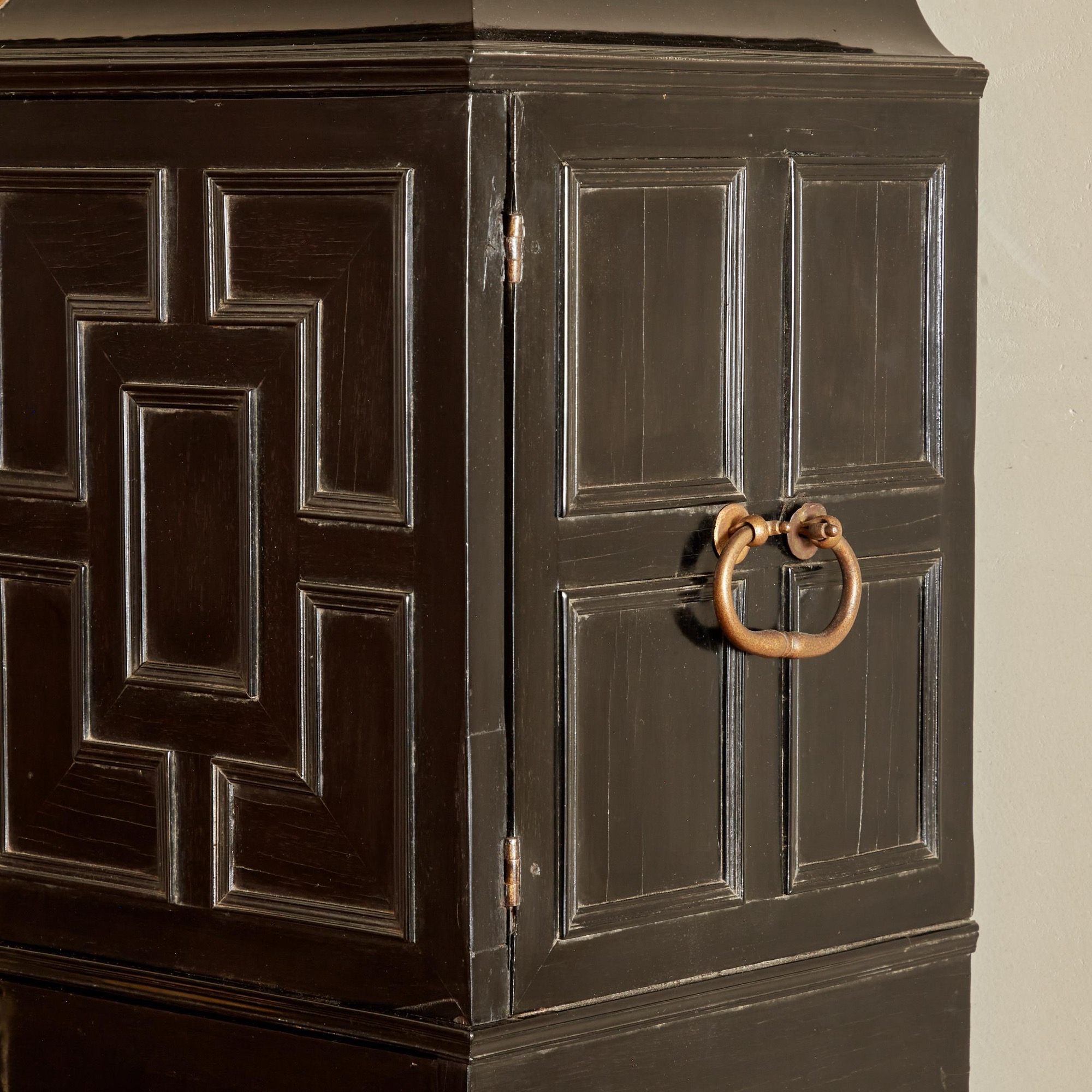
The ebony veneered two-door cabinet with fielded panels, beneath a rising caddy top enclosing a small velvet-lined compartment and two stump work panels flanking a central mirror. The doors opening to reveal a fitted interior of ten drawers and a central cupboard, all faced in embroidered silk stumpwork panels. The central cupboard enclosing a mirrored arcaded interior with a bone and ebony chequer board floor. Above a frieze drawer and all on turned bun feet.
Standing on a later 19th-century ebonised barley sugar twist stand.
Antwerp, circa 1640
Closed cabinet dimensions excluding stand: Height 56cm, Width 61cm, Depth 31cm
The composition of the cabinet is easily attributable to Antwerp workshops but the raised silk panels to the drawer fronts and inside doors do not appear as often as the painted panels more commonly encountered. The reason for this was both expense and availability of skilled silk workers. From 1530, Antwerp was the centre of the European silk industry, but by the 1640s, at a time when many of the Protestant silk weavers had left Flanders for England as refugees of the
Eighty Years' War, silk embroidery work in Antwerp waned.
Commissions like this would have been carried out by only a handful of silk workshops and would have come at a significant price.
The cabinet itself is testament to the power of the Dutch East India Company at the time. The ebony, the silk, and the exoticism of the subject matter are a representation of the far-reaching trade ties afforded to the Dutch, in this case as a result of their successful conflicts against the Portuguese in South Asia.
A very similar cabinet can be found in the Snijders & Rockoxhuis museum, Antwerp.
Dimensions:
RELATED ITEMS